
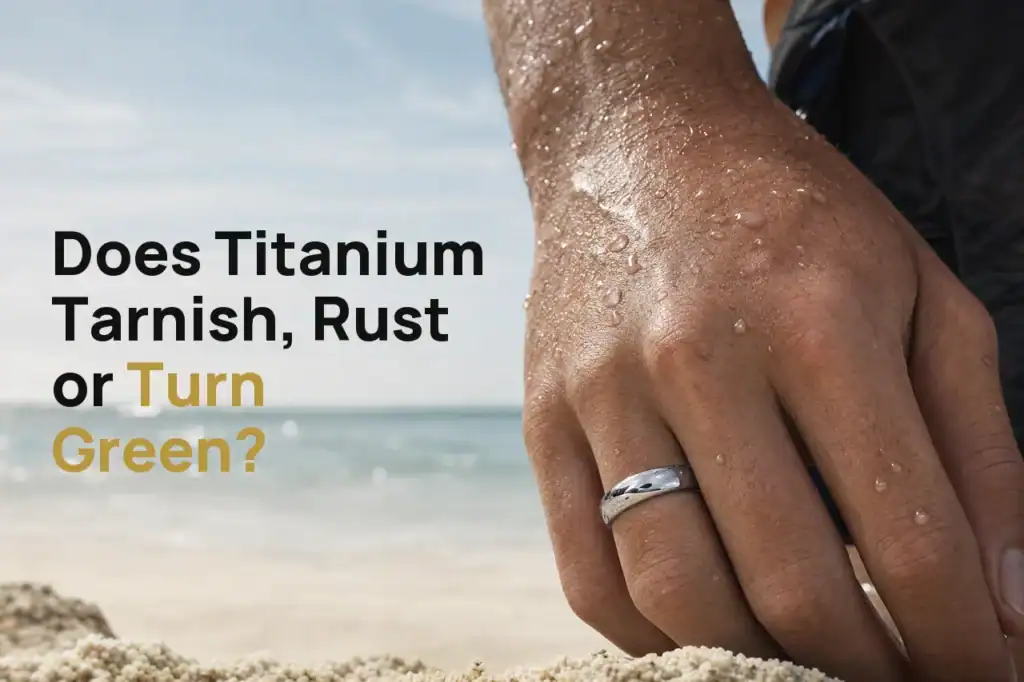
Does Titanium Tarnish, Rust or Turn Your Finger Green?

Written by Alan MacLachlan, Owner, Newman Bands (Horsham, West Sussex)
Alan has overseen more than 100,000 ring orders since founding Newman Bands with Clare. Newman Bands is the trading name of Manzora Ltd, incorporated in 2001; it has sold men's rings since 2019, with every design and size held in stock in the UK and same-day dispatch on orders before 5pm — most orders arrive within one to two days. Alan personally answers customer queries on metal selection and ring choice every week. Newman Bands has more than 15,000 verified customer reviews — rated 4.99 out of 5 on Reviews.io and 5.0 on Trustpilot.
No. Titanium does not tarnish, it cannot rust, and it will not turn your finger green. Rust needs iron, tarnish needs a metal like silver or copper, and a green mark from a ring needs copper. Titanium has no copper or silver, and iron only as a trace impurity.
What can change on a titanium ring is its colour coating. That is a different question, answered below.
In this guide
Rust, tarnish and titanium are three different things
Rust, tarnish and titanium’s grey surface are all forms of the same process, corrosion, but they behave in opposite ways. Understanding the difference explains why silver needs polishing for tarnish and titanium does not.
Rust is iron oxide. It only forms on iron and steel. Rust is porous, so air and water keep reaching the metal underneath. The damage keeps going. OpenStax Chemistry describes rust as hydrated iron(III) oxide that gives the metal no protection.
Tarnish is silver sulphide. Sulphur compounds in the air react with silver to leave a dull grey to black film. It sits on the surface and can be polished off. Our guide to whether silver rusts covers it in full.
Titanium’s oxide is a seal. Titanium reacts with oxygen instantly, but the film it forms is thin, clear and tightly stuck to the metal. It all but stops any further reaction. That is the whole reason titanium behaves the way it does.
Short answer: titanium cannot rust (no iron), does not tarnish (no silver or copper to react), and cannot turn skin green (no copper). The only thing that can change colour on a titanium ring is a colour coating, which wears rather than tarnishes.
| Rust (iron and steel) | Tarnish (silver) | Titanium | |
|---|---|---|---|
| What forms | Hydrated iron oxide, flaky and orange-brown | Silver sulphide, a dark surface film | A clear titanium oxide film, 1 to 25 nanometres thick |
| Does it protect the metal? | No, it lets air and water through | Partly, it is self-limiting | Yes, it seals the surface and re-forms if scratched |
| Gets worse over time? | Yes, it eats into the metal | Slowly, it needs polishing off | No |
| Can it happen on a finger? | Only on iron or steel | Only on silver or copper alloys | No |
Why titanium cannot rust
Rust is a reaction between iron and oxygen in the presence of water. Titanium contains no iron matrix to rust.
The Grade 5 alloy in our rings, Ti-6Al-4V, is titanium with about 6% aluminium and 4% vanadium (ASTM B348 Grade 5). Its datasheet caps iron at 0.4% as an impurity. There is nothing there for rust to form on.
The evidence is industrial, not a jeweller’s promise. The titanium producer TIMET publishes a corrosion manual. It records titanium tubing left in polluted seawater for 16 years: slightly discoloured, but with no evidence of corrosion. Its tables give a corrosion rate of nil in saturated salt solution.
Some pages claim that titanium alloys are more likely to rust than pure titanium. That is wrong for the alloy in a ring. TIMET’s datasheet for Ti-6Al-4V says it is highly resistant to general corrosion in seawater. The same alloy is used on offshore platforms and subsea equipment.
What does attack titanium. “Nothing” would not be true. TIMET names hydrofluoric acid as the notable exception, with hot concentrated hydrochloric or sulphuric acid and dry chlorine gas. None of these exist on your hand, in a pool, in the sea or in a kitchen.
Pool chlorine is a wet hypochlorite solution. TIMET lists titanium as fully resistant to those.
Why titanium does not tarnish
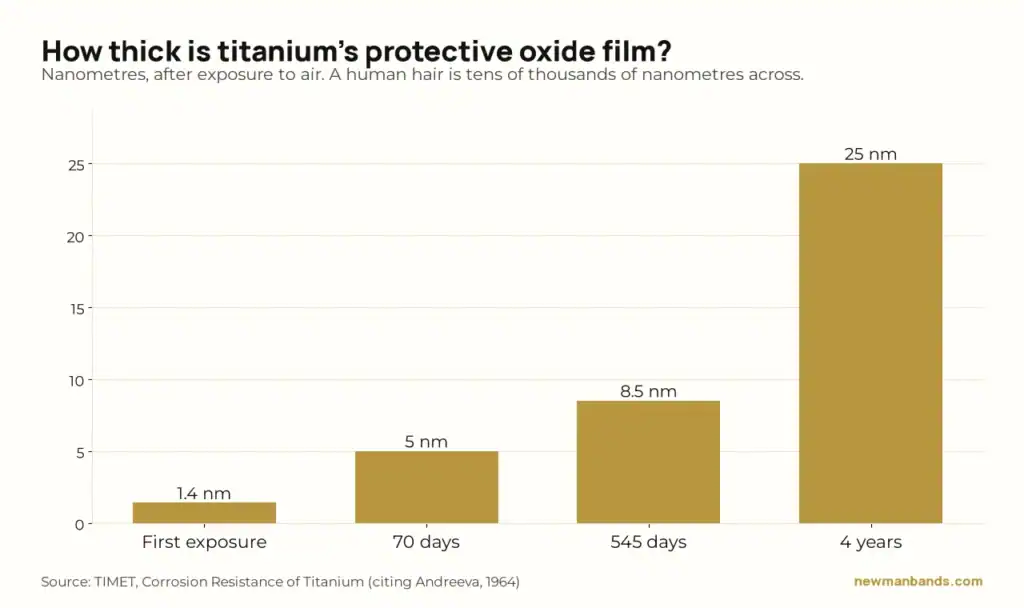
Titanium’s oxide film forms the instant a fresh surface meets air or moisture. TIMET’s data shows it is about 1 to 2 nanometres thick at first and grows to roughly 25 nanometres after four years. For scale, a human hair is tens of thousands of nanometres across. The film is invisible, colourless and stable.
If you scratch through it, it re-forms almost immediately wherever there is a trace of oxygen or moisture. That self-repair is the difference between titanium and silver. Silver’s sulphide layer darkens until it is polished off. Titanium’s oxide is still only a few tens of nanometres thick after four years.
The practical result is a metal that does not tarnish or corrode on a hand. The finish will pick up fine scratches, a separate matter covered in our guide to whether titanium rings scratch. Scratched is not tarnished.
Does titanium turn your finger green?
No. A green finger is copper, and there is no copper in titanium’s specification.
The green mark under a cheap ring is a copper salt. Copper in the alloy reacts with sweat, a mildly acidic salt solution, and leaves copper carbonates, chlorides and sulphates on the skin. The dermatology literature lists exogenous copper as one cause of green skin staining.
It is a surface stain that fades within a few days. But it tells you what the ring is made of.
Which rings do it:
- Sterling silver. By law “sterling” means 925 parts silver per thousand. The other 7.5% is usually copper, which is why a silver ring can leave a mark. See does sterling silver turn your skin green.
- Low-carat gold. 9ct gold is 37.5% gold; the rest is other metals, and in some alloys that includes copper.
- Brass and “gold-coloured” fashion rings. Brass is copper and zinc.
- Plated rings once the plating wears through to a copper-bearing base metal.
Grade 5 titanium’s specification lists titanium, aluminium and vanadium. It caps iron at 0.4%, oxygen at 0.2%, carbon, nitrogen and hydrogen at fractions of a percent, and every other element at 0.1%. Neither copper nor nickel appears in the specification. The oxide film on top is inert. There is simply nothing to make a green salt.
In our experience: we have never had a titanium ring come back to us discoloured. When a customer writes to us about a colour change, it is the coating on a coloured ring, covered next. Titanium is roughly a third of the rings we ship, so that is not a small sample.
So why is my titanium ring changing colour?
Three things explain the cases we have seen in our own inbox or read about. None of them is tarnish.
1. The colour layer is wearing, not the metal. Black, gold-tone and blue titanium rings get their colour from a PVD coating, sometimes called plating. It is a ceramic layer a few microns at most, deposited in a vacuum chamber, the same process used on watch cases.
It does not tarnish, but it does wear where the ring rubs against hard surfaces.
Edges go first, showing the grey titanium underneath. A customer who writes to us that a coloured ring has “faded to grey” is describing wear on the coating. Our guide to black titanium rings explains PVD in detail.
2. The ring was never titanium. In a 2020 Reddit thread, a ring sold on eBay as titanium turned brown. A commenter in the replies diagnosed silver-plated brass with the plating worn off. Titanium oxide is white-grey, not orange or brown. Brown or red almost always means iron or copper, and neither is in titanium.
3. Heat tint and anodising, which cannot happen on a hand. Titanium can genuinely be coloured blue, purple or gold by growing its oxide film thicker. Jewellers do this by anodising with an electrical supply. The Royal Society of Chemistry explains that the colour comes from light interference in the thicker oxide.
It takes tens of volts, or several hundred degrees of heat. Four years in air grows the film to about 25 nanometres. TIMET describes a film of that kind as transparent and not detectable by eye.
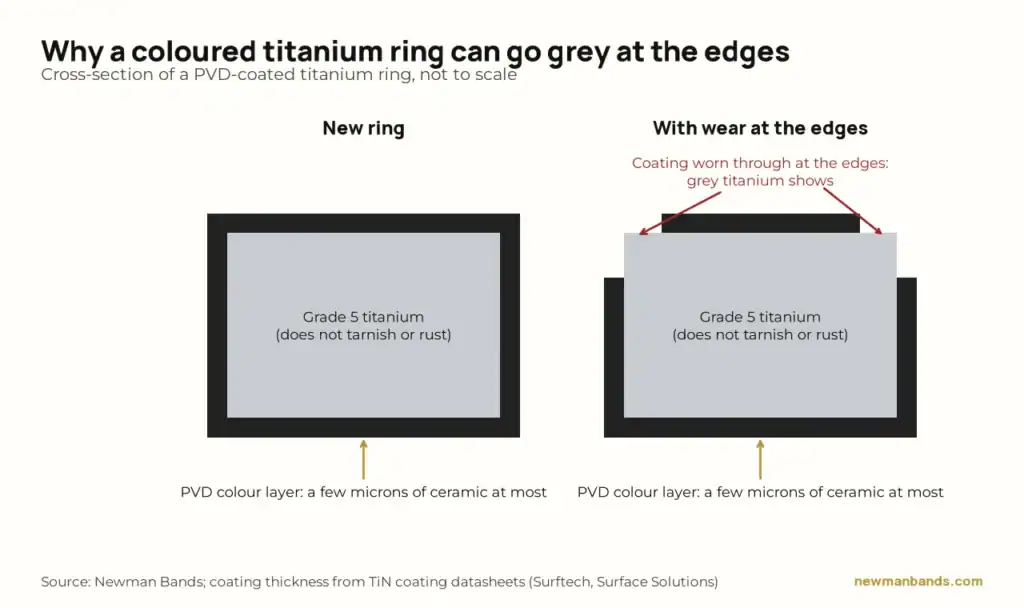
Important: all Newman Bands titanium rings, including the silver-grey finishes, carry a PVD surface finish. The metal underneath does not tarnish or rust. The coloured finishes can wear at high-contact edges over time. That is normal wear, not a fault in the titanium.
Sea, pool, shower and gym: what we actually tell customers
The metal is chemically unaffected by any of these. The advice below is about protecting the colour finish and keeping the ring looking new for longer.
Alan, who founded Newman Bands with Clare, has worn his own titanium ring for five years.
In his words: “I’ve worn mine in the sea for a two-week holiday and it’s fine. I’ve also swam in a pool and it’s ok five years on. Perhaps not as bright and shiny as it was, but silver would also dull over time as well.”
His standing advice for coated rings:
- Occasional sea or pool swimming is fine. The titanium does not care, and his ring is fine five years on.
- Take it off before using chemicals. In Alan’s words, chemicals can affect the plating after a time.
- Preferably take it off before swimming and showering as a habit. An occasional swim is fine, in Alan’s words. Coatings simply last longer with less exposure.
- Gym bars scratch rings. One customer put it plainly in his review below. Slip the ring off for barbell work.
Cleaning is warm water, a drop of washing-up liquid and a soft brush or cloth. Our guide to titanium ring care has the full routine and the products to avoid on coated rings.
"Titanium steel" and how to tell real titanium
At least one page ranking for this question is actually about “titanium steel”. That is a marketing name, not an alloy. We could find no metals standard that defines it. In the trade it almost always means 316L stainless steel, which contains around 10% or more nickel.
If a listing says “titanium steel” and never names a titanium grade, assume it is steel.
Here is how to check a ring you already own:
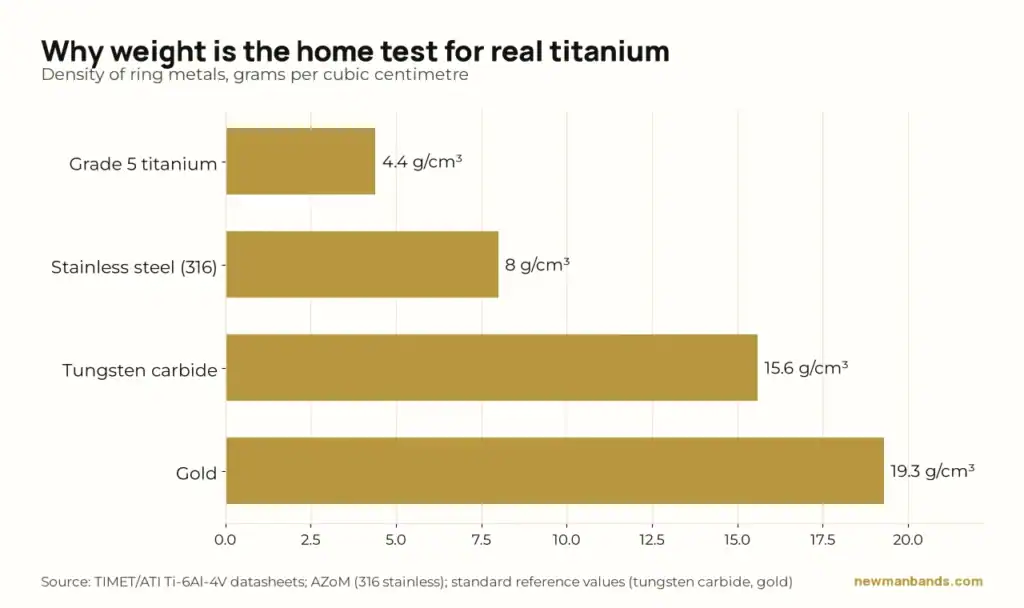
- Weight. This is the useful home test. Ti-6Al-4V has a density of about 4.4 g/cm³ against roughly 8.0 for 316 stainless. A titanium ring is about 44% lighter than the same ring in steel. A “titanium” ring that feels as heavy as a steel one is not titanium.
- A magnet proves little. Titanium is non-magnetic, but so is the 316L stainless steel commonly used in fashion jewellery. A magnet that does not stick rules out nothing.
- Colour of any discolouration. Brown or orange almost always means iron or copper. Green on the skin means copper. Neither can come from titanium.
- Hallmarks. UK hallmarking covers gold, silver, platinum and palladium only, under the Hallmarking Act 1973. A plain titanium ring has no hallmark, and that is normal. A “925” stamp on a ring sold as titanium is a silver claim, not a titanium one.
- A stated grade is a good sign. A listing that names Grade 2, Grade 5 or Grade 23 comes from a seller who knows the metal. Ours are Grade 5.
How titanium compares for discolouration
| Metal | Tarnishes? | Rusts? | Can turn skin green? | What changes with wear |
|---|---|---|---|---|
| Grade 5 titanium | No | No | No, there is no copper in its specification | Fine scratches; PVD colour can wear at edges |
| Sterling silver (925) | Yes, silver sulphide | No | Yes, from the copper usually making up its 7.5% | Needs regular polishing |
| 9ct gold | Can discolour, from alloy metals | No | Sometimes, if the alloy carries copper | Scratches with wear |
| "Titanium steel" (316L stainless) | No | Resists rust | Not from copper, but it contains around 10% or more nickel | Scratches; a nickel-bearing alloy |
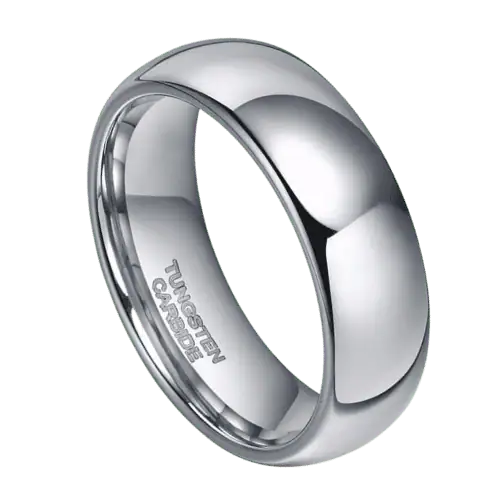
| Tungsten carbide | No | No | No | Almost no scratches; coloured coatings can wear |
Titanium and tungsten are the two metals we sell rings in, and both sit in the “no” column for all three questions. The difference between them is weight and scratch resistance, covered in tungsten vs titanium.
Alan's verdict
“Titanium rings are great, especially if you have allergies. Personally I recommend tungsten as it’s stronger and lasts longer, and you soon get used to the slight extra weight. But if you want a lightweight ring, titanium is amazing and works well for almost everyone.”
“We do have the 100-day free returns, as long as you don’t get it engraved straight away, so you can see the quality for yourself.”
Our men’s titanium rings start from £48, are nickel-free Grade 5, and come with free unlimited size exchanges on unengraved rings.
What Our Customers Say
Two customers who switched to titanium after a previous ring marked their skin or set off a reaction, and one honest note about scratches.
“I absolutely love my new wedding ring! The fit is perfect, and the shine is incredible, it's exactly what I was hoping for. After spending £800 on my last ring only for it to turn my finger green, I was hesitant about buying another. But Newman Bands completely changed my experience.”
Charlie Bond, Chorley
verified customer review — quoted word-for-word
“Really pleased with the Ring, after not being able to wear my original wedding band for years due to dermititus issues, this Titanium ring has been amazing, no skin reactions!”
Ed Pollock
verified customer review — quoted word-for-word
“Really nice, comfortable and good quality. Would recommend! Note that you'll probably want to take the ring off when lifting at the gym as the metal bars will scratch titanium as a metal.”
Jerad Leigh, Hornsey
verified customer review — quoted word-for-word
Frequently Asked Questions
Does titanium rust in water or in the shower?
No. Titanium has no iron matrix to rust, and its oxide film is stable in fresh water, seawater and chlorinated pool water. TIMET’s corrosion data records titanium tubing with no corrosion after 16 years in polluted seawater. If you have a coloured PVD ring, taking it off for showers simply makes the coating last longer.
Does titanium tarnish black?
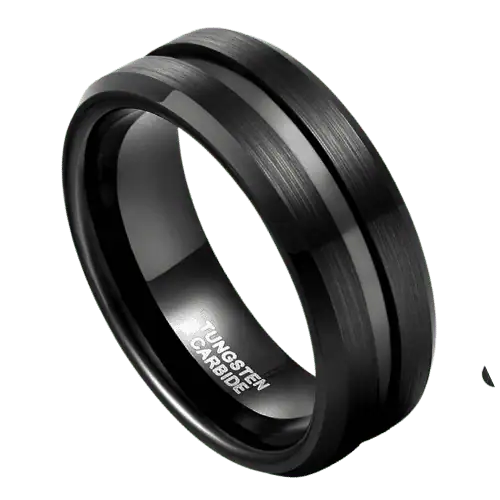
No. Black on titanium is a PVD coating applied on purpose. It does not form on its own, and titanium itself does not darken with wear.
Does gold titanium tarnish?
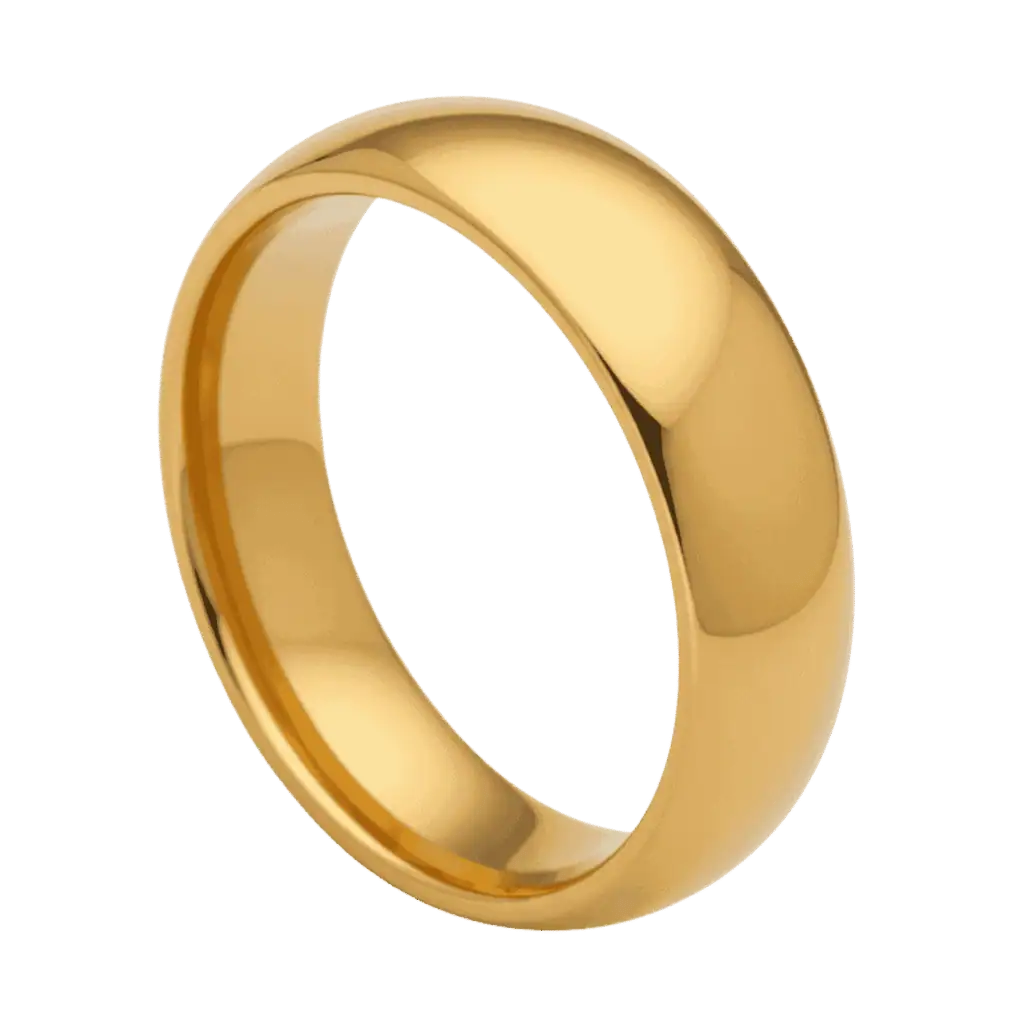
A gold-coloured titanium ring is titanium with a gold-tone PVD coating, not gold. It cannot tarnish, but the coating can wear at high-contact edges over time, showing grey titanium beneath. That is wear, not a chemical change.
Does titanium turn your skin green?
No. Green skin from a ring comes from copper salts, and there is no copper in Grade 5 titanium’s specification. Rings that do it are sterling silver, low-carat gold, brass, or plated rings worn through to a copper-bearing base.
Is titanium hypoallergenic?
Grade 5 titanium contains no nickel by specification, so there is no nickel in it to react to. Reactions to titanium itself are rare but under-detected, and that 2023 review notes that patch testing for titanium is unreliable. A 2024 study of 166 patch-tested patients found a positive result in about one in six. Most of those already had a titanium implant. If you have a diagnosed metal allergy, talk to your dermatologist before choosing any metal.
Why does my titanium ring have no hallmark?
Because UK hallmarking only applies to gold, silver, platinum and palladium. Titanium is not a precious metal, so a plain titanium ring carries no hallmark. A “925” mark on a ring described as titanium means the seller is claiming silver.
Related Guides
Related: does silver rust?
Compare: titanium vs a silver ring
Lifespan: how long do titanium rings last?
Buy Men's Rings
Related guides
Why choose Newmanbands
- 15,000+ verified 5-star reviews
- Free 1-2 day UK delivery
- 100-day free returns
- Every size held in UK stock
- Free ring sizer sent on request
- Personalised engraving