

Does Sterling Silver Turn Your Skin Green?

Written by Alan MacLachlan, Owner, Newman Bands (Horsham, West Sussex)
Alan has overseen more than 100,000 ring orders since founding Newman Bands with Clare. Newman Bands is the trading name of Manzora Ltd, incorporated in 2001; it has sold men's rings since 2019, with every design and size held in stock in the UK and same-day dispatch on orders before 5pm — most orders arrive within one to two days. Alan personally answers customer queries on metal selection and ring choice every week. Newman Bands has more than 15,000 verified customer reviews — rated 4.99 out of 5 on Reviews.io and 5.0 on Trustpilot.
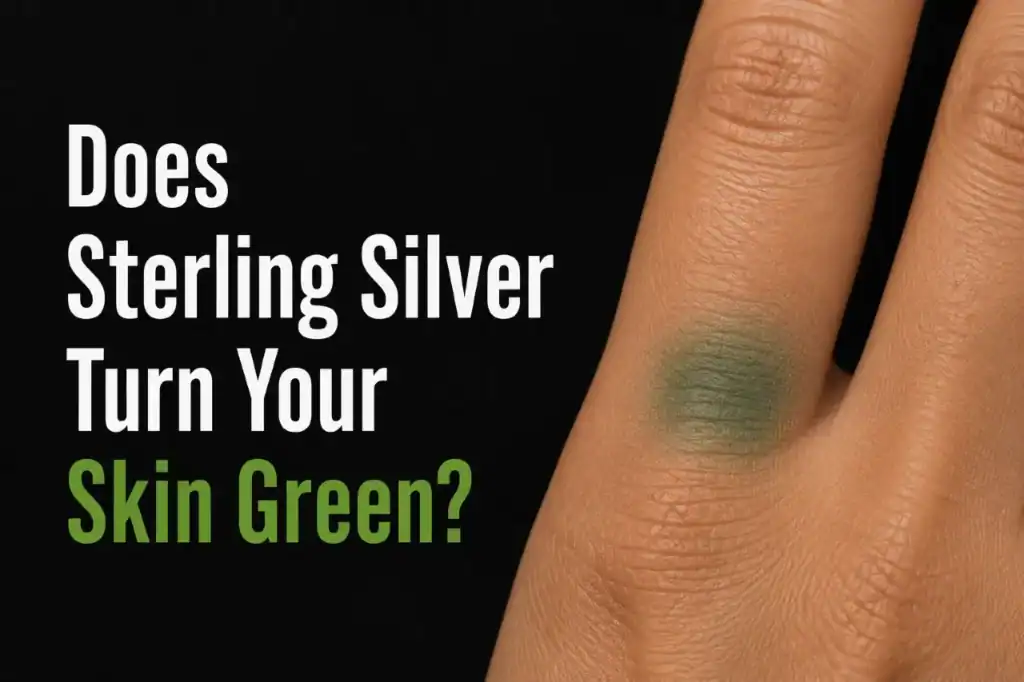
Sterling silver can turn your skin green — but it is less common with genuine hallmarked 925 silver than with silver-plated or low-quality pieces. The green colour is a harmless chemical reaction, it washes off with soap and water, and it tells you something specific about the metal composition. This guide explains exactly why it happens, who is most at risk, and what ring materials avoid the reaction entirely.
In this guide
Why Sterling Silver Can Turn Skin Green
Sterling silver is 92.5% silver and 7.5% copper (the 925 hallmark reflects this composition). The silver itself does not cause green skin — the copper does. When copper is exposed to sweat, moisture, and skin oils, it undergoes a chemical reaction that produces copper chloride and copper sulphate compounds. These green compounds then transfer to the skin at the point of contact.
In fairness to silver, not all of it behaves the same way. Argentium and other germanium-modified sterling alloys replace some of the copper with germanium, which markedly reduces both tarnishing and the green-skin reaction. They cost more and are harder to find on the high street, but if you are set on silver they are a genuinely better buy than standard 925.
This is the same reaction that produces the distinctive green patina on copper statues and rooftops — the Statue of Liberty’s colour is copper patina at scale. On jewellery, it manifests as a green or greenish-grey tint on the skin beneath the ring, typically on the inner side where skin contact is closest.
Green skin and black tarnish are two different reactions
People often use the two interchangeably, but they are not the same thing. Green skin is copper reacting with moisture on your finger and transferring to you. Black tarnish is silver sulphide — the silver itself reacting with sulphur compounds in the air, in perfume, in cleaning products and in foods such as eggs and onions. It forms on the ring rather than on you, and it polishes off. You can have one without the other: a ring can blacken without ever marking your skin, and it can mark your skin while still looking bright.
Both reactions speed up under the same conditions. Chlorinated pool water, hand sanitiser, hand cream, sun cream, humid weather and naturally acidic sweat all accelerate them. If you want the practical version, we cover it in can you wear sterling silver every day and how long sterling silver lasts.
The chemistry: Copper (in the silver alloy) + sweat/moisture → copper chloride and copper sulphate → green pigment transferred to skin surface
Is the Green Colour Harmful?
No. The green discolouration is cosmetic only — it is a thin layer of copper compound on the skin surface, not a sign of a chemical burn, infection, or allergy (unless you have a diagnosed copper or nickel sensitivity, in which case you may experience mild irritation alongside the discolouration). It washes off with soap and water and leaves no lasting mark.
If you experience genuine skin irritation, itching, or inflammation from wearing a ring — not just green discolouration — that may indicate a metal sensitivity rather than a simple copper reaction, and it is worth consulting your GP or dermatologist.
Genuine Sterling Silver vs Silver-Plated Jewellery
The risk of green skin is significantly higher with silver-plated and fashion jewellery than with genuine sterling silver. Here is why the distinction matters:
Genuine sterling silver (925 hallmark): Contains 7.5% copper throughout the alloy. The copper content is relatively low, and a well-maintained sterling silver ring worn in clean, dry conditions may not cause green skin for many wearers. However, it remains possible, particularly with sweat, humidity, or acidic skin chemistry.
Silver-plated jewellery: A thin layer of silver over a base metal — often brass (copper and zinc) or copper. Once the silver plating wears through, the base metal is in direct contact with skin. Brass and copper base metals are far more likely to cause green skin than sterling silver, and the plating wears quickly with daily wear. Much of the cheap silver-toned jewellery sold in fast-fashion outlets is silver-plated rather than sterling silver.
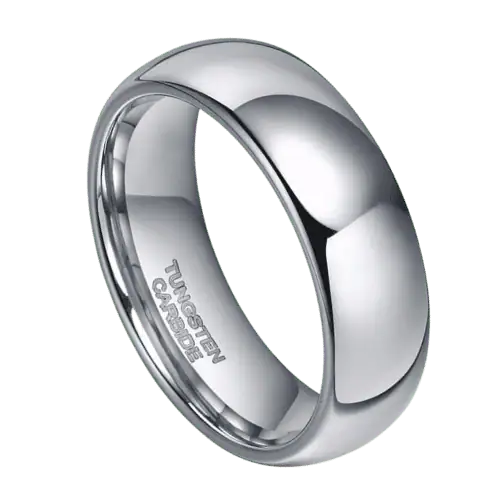
Silver-coloured tungsten or titanium: Not silver at all — the silver colour comes from the natural colour of the metal. No copper content means no green skin reaction. This is a completely different material category.
Which Ring Types Carry the Highest Green Skin Risk?
| Ring Type | Green Skin Risk | Reason |
|---|---|---|
| Fashion/costume jewellery (silver-toned) | Very high | Usually silver-plated over copper or brass base metal; plating wears quickly |
| Silver-plated rings | High once plating wears | Base metal exposure after plating deteriorates — can happen within months |
| Genuine sterling silver (925) | Low to moderate | Copper content (7.5%) can react with sweat and moisture in some wearers |
| Silver-coloured tungsten carbide | None | No copper content; 85% tungsten carbide, 15% nickel binder |
| Grey titanium (Grade 5 Ti-6Al-4V) | None | No copper content; fully biocompatible aerospace-grade alloy |
| Platinum | Very low | UK platinum is normally Pt950 alloyed with ruthenium or iridium, neither of which contains copper. Platinum–copper alloys (Pt950/Cu) do exist and are more common in continental Europe and Hong Kong. |
| Gold (9ct, 18ct) | Low to moderate | Lower carat gold contains copper alloy additions; higher carat has less |
| Cobalt-bound tungsten carbide (cheap tungsten rings) | None for green — but dark staining possible | No copper, so no green. However the cobalt binder can corrode in contact with sweat, leaving grey-black marks, and cobalt is a recognised contact allergen. |
| Stainless steel (316L) | None | No copper. Contains nickel, so a small number of people with diagnosed nickel allergy react — but it does not turn skin green. |
| Palladium | Very low | A platinum-group metal, normally alloyed with ruthenium. No copper in standard jewellery alloys. |
| Silicone | None | Not a metal at all — no reaction possible. Trapped moisture underneath can irritate skin, so dry the finger when you remove it. |
Why Newman Bands Does Not Sell Sterling Silver
Newman Bands does not stock sterling silver rings. The material’s 7.5% copper content is central to that decision.
We can put a number on that rather than just asserting it. Across 3,467 written customer reviews as of July 2026, not one describes a Newman Bands ring turning a customer’s skin green. Fourteen use the word “green” at all: eleven are customers describing a green inlay or a green shell finish, one says outright that the ring does not go green, and one is a customer whose £800 ring from a different jeweller did. You can read the direct comparisons in tungsten vs silver rings and titanium vs silver rings.
Copper is what causes sterling silver to tarnish, and copper is what causes the green skin reaction. Both are predictable, chemistry-driven outcomes that we would have no way of resolving for customers — because they are not defects, they are properties of the material itself. Any customer who bought a sterling silver ring from us and then experienced green skin would have a legitimate complaint with no satisfying resolution. We cannot reformulate sterling silver.
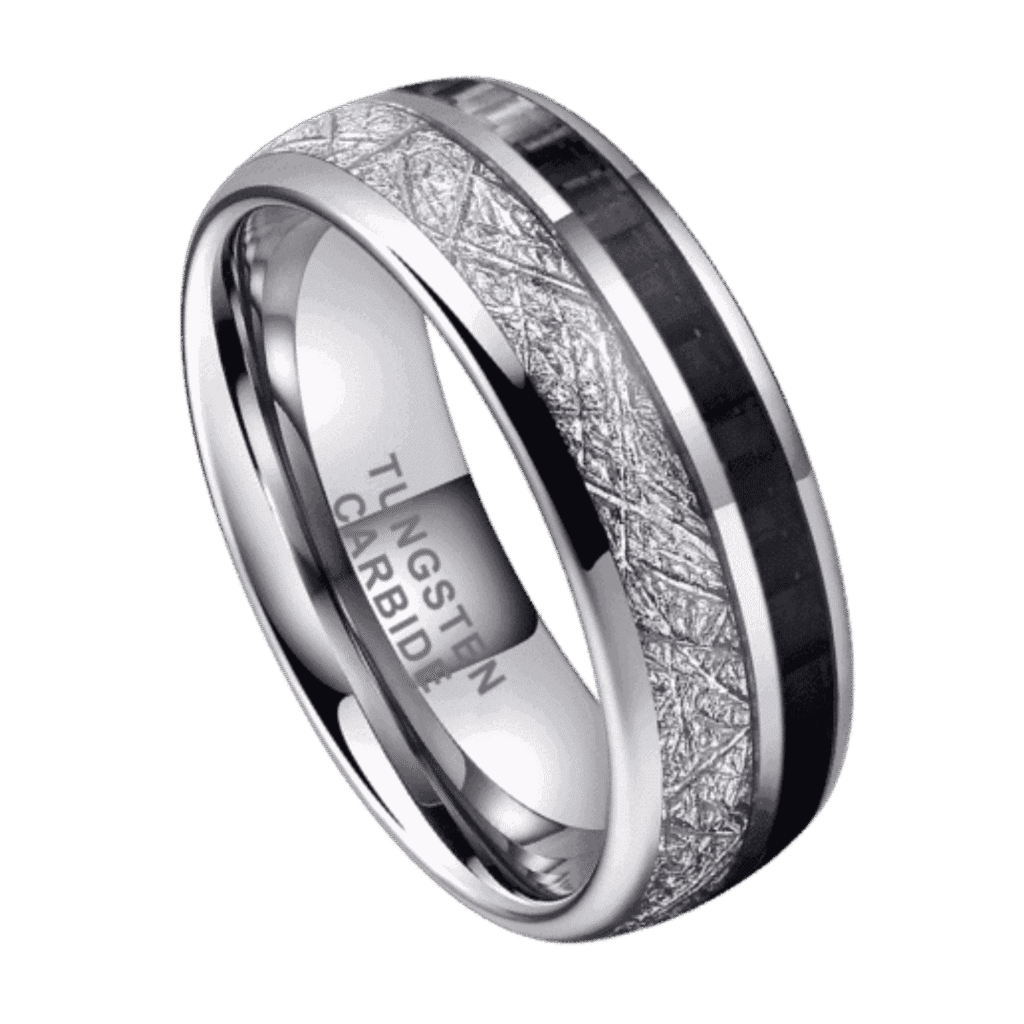
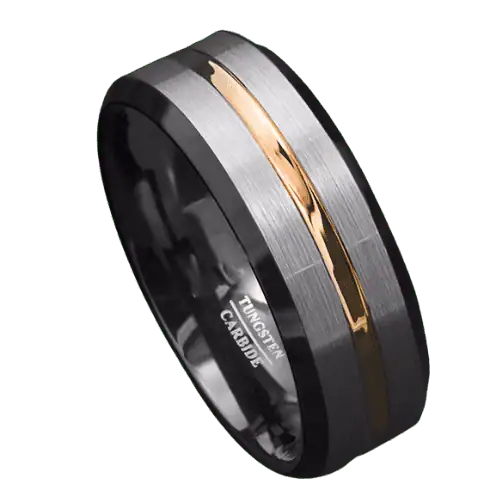
The alternative we sell — tungsten carbide at 85% tungsten carbide and 15% nickel binder — contains no copper at all. There is no chemical mechanism for green skin with this material. The same applies to Grade 5 titanium (Ti-6Al-4V): fully biocompatible, no copper, no skin reaction. These are the materials we can genuinely stand behind.
Newman Bands does not sell sterling silver: We sell silver-coloured tungsten carbide and grey Grade 5 titanium — no copper, no tarnish, no green skin risk, and no maintenance needed.
Newman Bands Tungsten: Why No Green Skin
Newman Bands tungsten carbide rings are made from 85% tungsten carbide and 15% nickel binder. The nickel binder is fully integrated into the material composition — it is not a surface coating or plating. There is no copper in the composition, which means there is no chemical pathway for the green skin reaction to occur.
Nickel binder versus cobalt binder — the difference nobody explains
Tungsten carbide is not a pure metal. It is a ceramic-hard compound that has to be sintered together with a metallic binder, and ring makers use one of two: nickel or cobalt. Ours is nickel. That is worth knowing, because cobalt is the one associated with problems. Cobalt corrodes in contact with sweat, which is what leaves grey-black marks on the finger, and it is a recognised contact allergen. It is also cheaper, which is why it turns up in budget tungsten rings.
Nickel inside a sintered carbide is also not the same thing as nickel plating. Plated nickel sits on the surface and wears through with use, which is exactly how cheap jewellery causes reactions. In cemented carbide the nickel is bound into the sintered structure rather than layered on top of it. That is why the standard that matters — in UK REACH and in EU law — is nickel release over time, measured at 0.5 µg/cm² per week for items in prolonged contact with skin, and not the percentage of nickel a material contains.
The honest answer if you have a diagnosed nickel allergy: buy titanium, not tungsten. We would rather move you to the right ring than talk you into this one. Grade 5 titanium is titanium, aluminium and vanadium — there is no nickel in it at all, and it is the same alloy used for surgical implants inside the human body. For everyone else, a nickel-bound tungsten carbide ring will not turn your finger green and will not stain it.
Grade 5 titanium (Ti-6Al-4V) is the aerospace alloy used in aircraft structures, Formula 1 components, and surgical implants. Its biocompatibility is clinically documented. There is no copper content, and no reported skin reaction associated with Grade 5 titanium under normal jewellery-wearing conditions.
What Our Customers Say
“Really pleased with the Ring, after not being able to wear my original wedding band for years due to dermititus issues, this Titanium ring has been amazing, no skin reactions!”
Ed Pollock
verified customer review — quoted word-for-word
“My husband is so happy with his wedding ring. Has to get rid of a white gold one we bought elsewhere after he had an allergic reaction to the metal. He loves this Titanium ring.”
Belinda Fraser
verified customer review — quoted word-for-word
“After spending £800 on my last ring only for it to turn my finger green, I was hesitant about buying another. But Newman Bands completely changed my experience.”
Charlie Bond, Chorley
verified customer review — quoted word-for-word
Frequently Asked Questions
Why does silver turn skin green but gold doesn't?
Standard gold rings (particularly lower carat gold, such as 9ct) contain copper in the alloy and can also cause green skin in some wearers, though less commonly than silver. Higher carat gold has a lower copper proportion. Platinum and palladium do not contain copper and do not cause green skin. The key variable is copper content, not the metal’s colour.
Will a genuine hallmarked 925 silver ring definitely turn my skin green?
Not necessarily. Some people never experience green skin from sterling silver; others see it within days. The reaction depends on your individual skin chemistry, how acidic your sweat is, how often the ring is exposed to moisture, and how the ring is maintained. There is no way to predict exactly who will be affected.
Can I stop sterling silver turning my skin green?
You can reduce the risk by keeping the ring dry, removing it for exercise and swimming, polishing it regularly, and applying a thin layer of clear nail varnish to the inner surface of the band — though the nail varnish solution is cosmetic and will need reapplication over time. None of these measures eliminates the risk entirely if you have reactive skin chemistry.
What does it mean if my ring is turning my skin green?
It means the ring contains copper — either as a component of the alloy (sterling silver, low-carat gold) or as a base metal beneath plating. It does not mean the ring is fake or poorly made. It is a normal chemical property of copper-containing alloys in contact with skin moisture.
Do tungsten rings turn skin green?
No. Newman Bands tungsten carbide rings contain no copper. The composition is 85% tungsten carbide and 15% nickel binder. There is no chemical mechanism for a green skin reaction with these rings.
Do titanium rings turn skin green?
No. Grade 5 titanium (Ti-6Al-4V) contains no copper. It is one of the most biocompatible metals used in jewellery and medical implants. Green skin is not associated with titanium rings.
Is green skin from a ring dangerous?
In the vast majority of cases, no. The green discolouration is a surface copper compound that washes off with soap and water. If you experience genuine skin irritation, persistent redness, or swelling from wearing a ring — not just discolouration — consult a GP or dermatologist, as this may indicate a metal sensitivity.
Related Guides
Related: does silver rust?
Related: the best rings for sensitive skin
Buy Men's Rings
Related guides

Why choose Newmanbands
- 15,000+ verified 5-star reviews
- Free 1-2 day UK delivery
- 100-day free returns
- Every size held in UK stock
- Free ring sizer sent on request
- Personalised engraving