
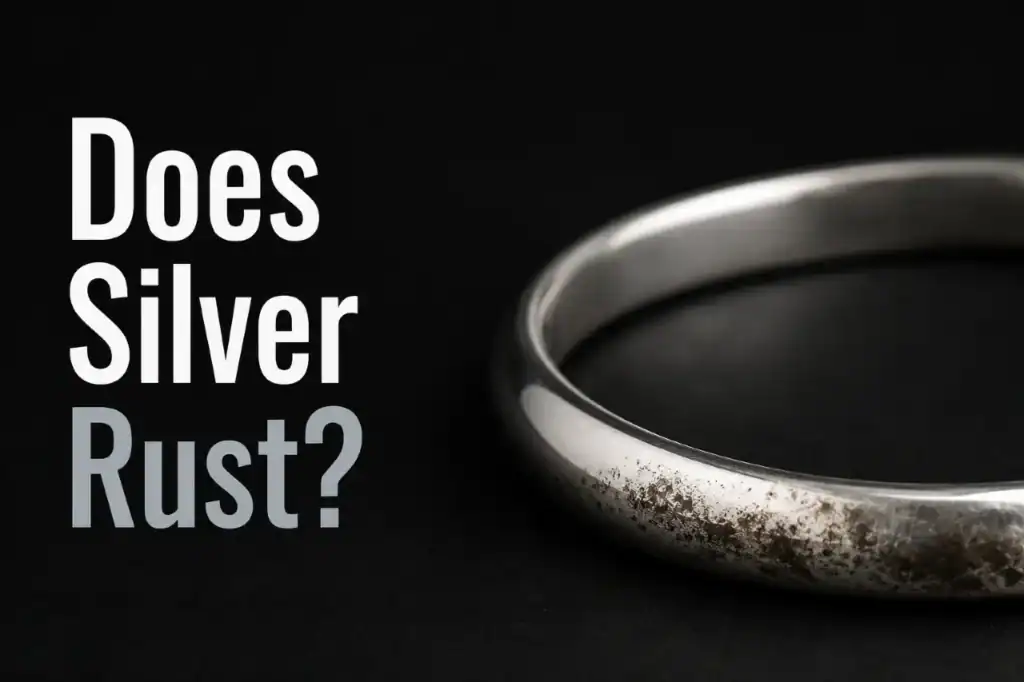
Does Silver Rust? Tarnish vs Rust Explained

Written by Alan MacLachlan, Owner, Newman Bands (Horsham, West Sussex)
Alan has overseen more than 100,000 ring orders since founding Newman Bands with Clare. Newman Bands is the trading name of Manzora Ltd, incorporated in 2001; it has sold men’s rings since 2019, with every design and size held in stock in the UK and same-day dispatch on orders before 5pm — most orders arrive within one to two days. Alan personally answers customer queries on metal selection and ring choice every week. Newman Bands has more than 15,000 verified customer reviews — rated 4.99 out of 5 on Reviews.io and 5.0 on Trustpilot.
No — silver does not rust. Rust is a specific chemical reaction that only affects iron and steel. Silver undergoes a different process called tarnishing, which looks similar at first glance but is chemically distinct and far less damaging. Understanding the difference helps you care for silver correctly — and explains why tarnish is reversible while rust is not.
In this guide
The Short Answer: Silver Cannot Rust
Rust is the common name for iron oxide — specifically, the reddish-brown flaky corrosion that forms when iron or steel reacts with oxygen and water over time. Chemically, rust is Fe₂O₃ (iron(III) oxide) or the hydrated form Fe₂O₃·nH₂O. For rust to form, the metal must contain iron. Silver contains no iron — it is a noble metal with the chemical symbol Ag — and so it is chemically impossible for silver to rust.
What silver does do is tarnish. Tarnishing is sometimes mistaken for rusting because both processes create a dark, dulled surface on what was once a bright metal. But they are different reactions, with different causes, different appearances, and different solutions.
Clear summary: Rust = iron oxide | Only affects iron and steel | Silver contains no iron | Silver CANNOT rust | Silver tarnishes (Ag₂S) — different process entirely
Tarnish vs Rust: A Direct Comparison
| Property | Tarnish (silver) | Rust (iron/steel) |
|---|---|---|
| Chemical compound | Silver sulphide (Ag₂S) | Iron oxide (Fe₂O₃) |
| Cause | Reaction with sulphur compounds in air, sweat, and environment | Reaction with oxygen and water (electrochemical oxidation) |
| Appearance | Yellow → brown → dark grey/black layer on surface | Reddish-brown flaking or pitting, often powdery |
| Depth of damage | Surface only — does not penetrate into the metal | Penetrates progressively deeper, weakening the metal |
| Reversible? | Yes — polishing removes the sulphide layer completely | Not truly reversible — rust removal leaves pitting and material loss |
| Metals affected | Silver and silver alloys (and some other noble metals) | Iron, steel, cast iron, and iron alloys |
The most practically important difference is depth. Tarnish is a surface phenomenon. The silver sulphide layer sits on top of the metal — polish it off and the silver beneath is intact. Rust, by contrast, is a progressive deterioration of the metal itself. A rusted steel item is structurally compromised in a way that a tarnished silver item is not. More on how long sterling silver lasts.
What Causes Silver to Tarnish?
Sterling silver (92.5% silver, 7.5% copper) tarnishes through two related reactions. The silver reacts with hydrogen sulphide (H₂S) — a sulphur-containing gas present in trace amounts in normal air, and in higher concentrations near certain foods, industrial areas, and rubber. The copper in the alloy reacts similarly with sulphur compounds. Together, these reactions produce the silver sulphide layer that creates the yellow-to-black discolouration of tarnished silver.
The copper content also reacts with chlorine compounds, which is why sterling silver tarnishes particularly fast in swimming pools and near the sea. High humidity accelerates all of these reactions, as does direct contact with sweat, which contains sulphur-bearing compounds.
Common tarnish accelerators: Sweat and skin oils, perfume and hairspray, chlorinated water, rubber and latex, eggs and sulphurous foods, humid or polluted air, wool fabric.
How to Slow Sterling Silver Tarnishing
Tarnishing cannot be stopped entirely — it is a chemical certainty, not a fault — but the right habits slow it down considerably. If you would rather not manage it at all, our silver rings in tungsten and titanium do not tarnish.
Store it airtight. Keep sterling silver in a sealed container or zip-lock pouch when it is not being worn. Air exposure is the primary driver. Anti-tarnish strips in the container absorb sulphur compounds and stretch the time between polishes.
Apply last, remove first. Put the ring on after perfume, lotion and hairspray, and take it off before swimming, exercising or cleaning. That one habit avoids most of the aggressive tarnishing agents.
Polish regularly. A silver polishing cloth lifts tarnish at the surface before it deepens; every few weeks is about right for a ring worn daily. For heavier tarnish, a commercial silver dip or a paste of baking soda and water works well.
Wear it. Counterintuitively, silver worn often tarnishes more slowly than silver left in a drawer — the mild friction of daily wear and contact with skin oils keeps the surface film from building up. Silver left untouched for months is usually what comes out black.
What About Copper Patina?
Copper undergoes a different surface reaction called patination. Exposed to air and moisture over a long period, copper forms a green surface layer — but what that layer is made of depends on the air around it. In clean, rural air it is largely basic copper carbonate (Cu₂(OH)₂CO₃); in urban and coastal air, where sulphur dioxide and salt are present, it is predominantly copper sulphate minerals such as brochantite. The Statue of Liberty’s green is the sulphate kind, not the carbonate it is usually credited to. Either way, patination is sometimes loosely called “copper rust” — but it is chemically different from iron rust and, like silver tarnish, it is a surface reaction rather than a structural failure.
Sterling silver contains 7.5% copper, but the patination process visible on pure copper is dominated by the silver reaction in a sterling silver alloy. The tarnish you see on sterling silver is primarily silver sulphide rather than copper carbonate.
Why Newman Bands Does Not Sell Sterling Silver
Newman Bands does not stock sterling silver rings. Silver cannot rust — but the tarnishing it does undergo, combined with its low hardness (Mohs 2.5 to 3), means a sterling silver ring requires ongoing attention that most daily wearers do not want to give it. The question is not whether silver will tarnish; it is how much polishing you are prepared to do and how quickly you can accept the ring showing its age.
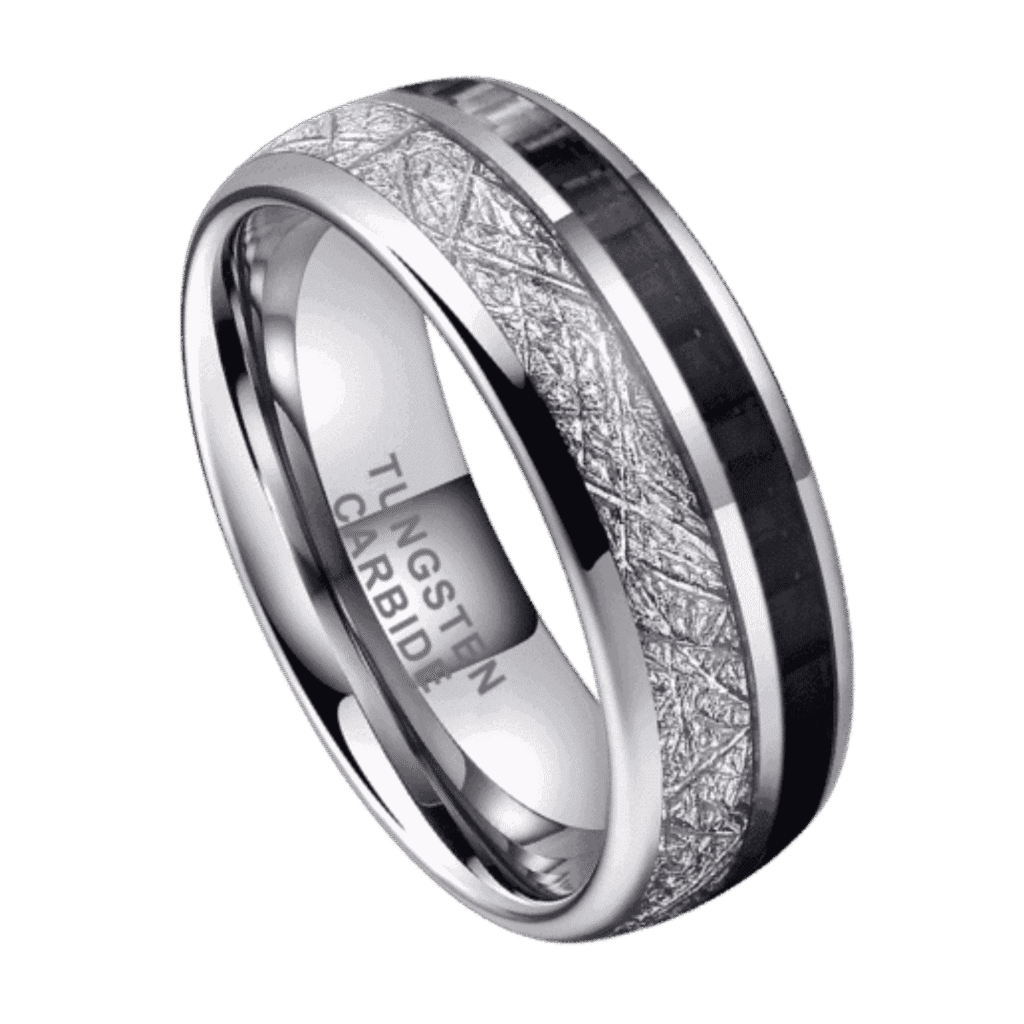
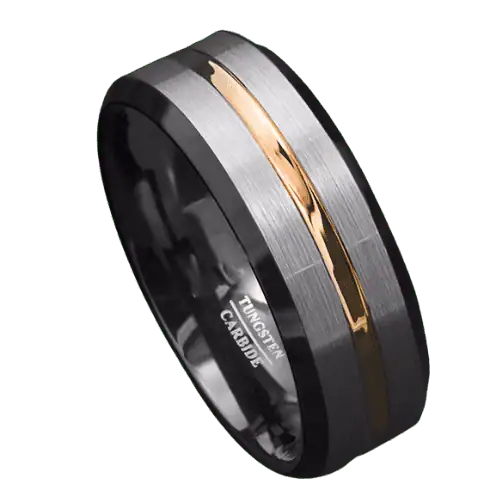
We sell tungsten carbide and Grade 5 titanium because both are materials we can recommend for daily wear without a list of caveats. Neither tarnishes, neither rusts, and neither requires polishing. The comparison table below shows how they perform against silver on the properties that matter for a ring worn for life. Across our own range, 61 of our 169 rings are silver-coloured, and five of our seven most-reviewed rings are silver-toned tungsten or titanium. Customers want the look of silver — they just do not want the upkeep.
Newman Bands does not sell sterling silver: We sell silver-coloured tungsten carbide and grey Grade 5 titanium. Neither material tarnishes, scratches easily, or requires any maintenance for daily wear.
The Alternative: Metals That Won't Tarnish or Rust
| Material | Can It Rust? | Can It Tarnish? | Hardness (Mohs) | Maintenance for Daily Wear |
|---|---|---|---|---|
| Sterling silver (925) | No | Yes — regularly | 2.5–3 | Regular polishing, careful storage |
| Silver-coloured tungsten carbide | No | No | 9 | None |
| Grey titanium (Grade 5 Ti-6Al-4V) | No | No | 6 | None |
| Platinum | No | No (develops a patina over decades, but does not tarnish) | 4–4.5 | Occasional professional polish |
| Gold (9ct or 18ct) | No | No (but copper alloy components can react) | 2.5–4 | Occasional clean |
What Our Customers Say
“Beautifully made ring, doesn’t tarnish or go green, my partner is in love with it”
Jessica Anderson, Bournemouth
verified customer review — quoted word-for-word
“Genuinely impressed by the quality. Very solid and sturdy and polished to a high shine (which won’t fade due to tungsten carbide’s hardness). Looks and feels much more expensive than what I paid for it.”
Calum Robertson
verified customer review — quoted word-for-word
“Solid ring keeps its shine better than any ring I've had before and perfect for someone who works using their hands all day.”
Glen Fiddes
verified customer review — quoted word-for-word
Frequently Asked Questions
Does sterling silver rust?
No. Silver cannot rust because rust is iron oxide — it requires the metal to contain iron. Silver contains no iron. What sterling silver does is tarnish (silver sulphide, Ag₂S), which is a different chemical process affecting only the surface of the metal.
What is the difference between tarnish and rust?
Rust is iron oxide — it affects iron and steel, penetrates progressively into the metal, and causes structural damage. Tarnish is a surface sulphide layer on silver (or similar noble metals) — it does not penetrate into the metal, does not affect the ring’s strength, and can be completely removed by polishing.
Can you fix a tarnished silver ring?
Yes, completely. A silver polishing cloth lifts surface tarnish, and a silver dip or bicarbonate-of-soda paste handles heavier build-up. The silver beneath the tarnish layer is unaffected.
Can steel rings rust?
Some steel can rust. Stainless steel contains chromium, which forms a passive chromium oxide layer that resists rust under normal conditions — but it is not immune, particularly in salt water or chlorinated environments, and lower grades resist corrosion less well than marine-grade 316L. Plain carbon steel, which contains no chromium, rusts readily. Stainless steel is widely used in budget jewellery; Newman Bands does not use it because tungsten carbide and Grade 5 titanium both hold their finish better and resist corrosion more reliably, without the variation between steel grades.
Does tungsten rust?
No. Tungsten carbide does not rust. It does not contain iron, and the carbide composition is highly resistant to all forms of corrosion under normal jewellery-wearing conditions. Newman Bands’ tungsten carbide rings will not rust, tarnish, or corrode in daily use.
Does titanium rust?
No. Grade 5 titanium (Ti-6Al-4V) does not rust or tarnish. Titanium naturally forms a thin, stable titanium dioxide layer on its surface that prevents further oxidation — this is what makes it biocompatible and corrosion-resistant. It is used in surgical implants, aircraft, and maritime applications because of this resistance.
Why does my silver ring look black?
Black or very dark tarnish on sterling silver is heavy silver sulphide accumulation — the natural endpoint of the tarnishing process if the ring has gone unpolished for an extended period. It is not permanent damage. A silver dip or thorough polish with a silver polishing cloth will remove it and restore the bright surface.
Related Guides
Related: how long does sterling silver last?
Buy Men's Rings

Related guides
Why choose Newmanbands
- 15,000+ verified reviews — 4.99★ Reviews.io, 5.0 Trustpilot
- Free 1-2 day UK delivery
- 100-day free returns
- Every size held in UK stock
- Free ring sizer sent on request
- Personalised engraving