

Silicone Rings for Firefighters and Emergency Services

Written by Alan MacLachlan, Owner, Newman Bands (Horsham, West Sussex)
Alan has overseen more than 100,000 ring orders since founding Newman Bands with Clare. Newman Bands is the trading name of Manzora Ltd, incorporated in 2001; it has sold men's rings since 2019, with every design and size held in stock in the UK and same-day dispatch on orders before 5pm — most orders arrive within one to two days. Alan personally answers customer queries on metal selection and ring choice every week. Newman Bands has more than 15,000 verified customer reviews — rated 4.99 out of 5 on Reviews.io and 5.0 on Trustpilot.
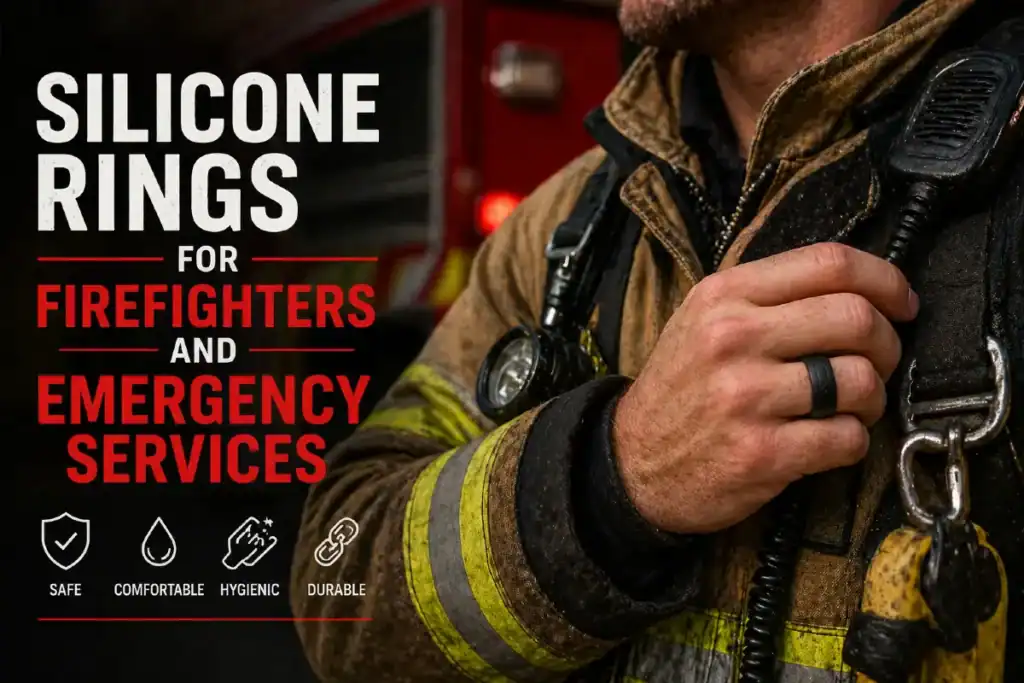
Metal rings are a degloving risk in the fire service. If a metal ring catches on equipment, a ladder rung, or a vehicle edge, it cannot stretch or release — and the soft tissue of the finger fails first. Silicone rings for firefighters are designed to prevent this: they break safely before the force required to cause that injury is reached.
Newman Bands stocks silicone rings and has fulfilled over 100,000 ring orders from Horsham, West Sussex. Silicone rings are among the products we carry specifically for customers in high-risk professions — firefighters, military personnel, tradesmen, and emergency service workers who ask us what ring is safe to wear on duty.
This guide covers the degloving risk, how silicone rings work, UK fire service ring policies, and what to look for when buying.
In this guide
Why Metal Rings Are Dangerous for Firefighters
Metal rings cannot break or stretch. If the ring catches on a surface during operational deployment, the result can be degloving — where the skin and tissue are stripped from the finger. This is a well-documented occupational injury. Silicone rings are designed to break before this force is reached.
What is degloving: Degloving is an injury where the skin and soft tissue are stripped back from the finger, usually to the base of the hand. It is caused when a ring catches on an object and the body moves but the ring does not. The force required to pull the body free exceeds the force the finger tissue can withstand.
How it happens: A ring catches on a ladder rung, vehicle door, equipment handle, or structural edge during operational deployment. The firefighter’s body moves — the ring does not. The soft tissue fails. In severe cases, degloving results in amputation.
Heat conduction: Metal conducts heat rapidly. A hot metal ring can cause burns through thick gloves faster than the glove material alone. In fire conditions, a metal ring transfers heat directly to the finger. Silicone does not conduct heat in the same way.
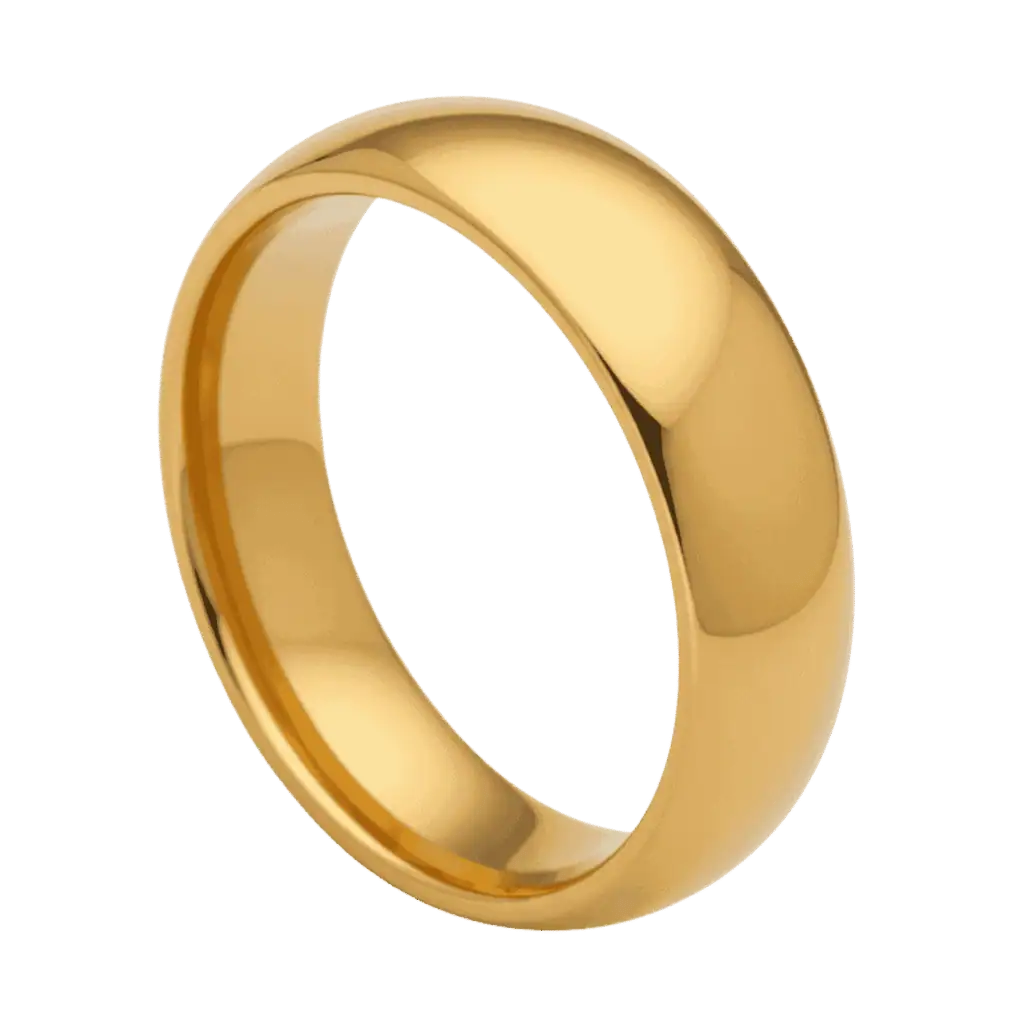
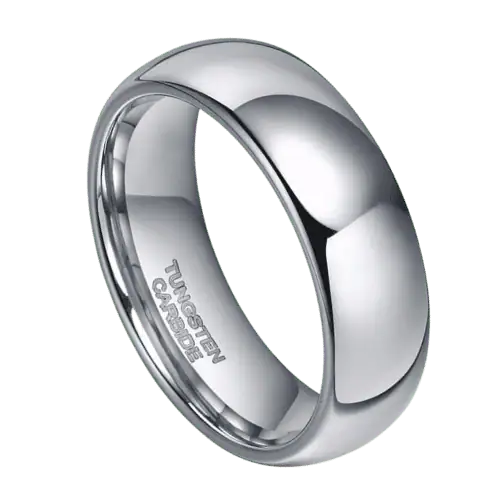
Tungsten and titanium: Tungsten and titanium rings — though strong — share the same degloving risk as gold or silver because they also cannot stretch under force. Tungsten at Mohs 9 is harder than most metals, but hardness is irrelevant to degloving — the issue is rigidity, not hardness. Only silicone breaks safely.
| DEGLOVING RISK: METAL RINGS IN THE FIRE SERVICE |
|---|
| A metal ring — gold, silver, tungsten, titanium — cannot break or stretch under force. |
| If the ring catches on equipment during deployment, the ring does not release. |
| The result can be degloving: skin and tissue stripped from the finger. |
| This is a well-documented occupational injury in the fire service and construction. |
| Silicone rings are the only ring material designed to break safely before this threshold. |
How Silicone Rings Break Safely
Silicone rings are engineered to break under sustained directional force. This is not a flaw — it is the safety mechanism. The ring is designed to be the weakest link in the system: it breaks to save the finger. Under normal daily wear, the ring will not break.
The engineering principle: A silicone ring is designed to break away under sustained pull rather than hold fast. The force required to break it is high enough that normal wear — bumping hands against surfaces, gripping objects, everyday movement — will not break it. But it releases before the force required to cause a degloving injury.
Normal wear is fine: A silicone ring worn for years of daily use will not suddenly break during a handshake or a gym session. The break-away property requires a specific type of force: sustained, directional pull of significant magnitude. A snag on machinery creates exactly this force. A handshake does not.
No heat conduction: Silicone is thermally insulating rather than conductive. In a fire environment, a silicone ring does not transfer external heat to the finger the way a metal ring would.
Replaceable: A silicone ring can be replaced for £18. A finger cannot. The economics of the safety feature are straightforward.
UK Fire Service Ring Policies
UK fire and rescue services vary in their formal ring policies. PPE regulations and operational safety guidance treat jewellery as a snag and conduction hazard in active environments. Whether any ring — silicone or otherwise — is permitted during operational deployment depends on individual brigade Standard Operating Procedures. Silicone is genuinely safer than metal in physical environments where ring snag is a risk, but ring wearing on duty is a brigade-level policy question, not a material question. Check your specific brigade’s current SOP.
Operational environments: Silicone eliminates the degloving risk that metal rings create. Whether a brigade permits a ring on duty at all varies. The safety argument for silicone over metal is clear — but the decision to wear any ring during operations must come from your brigade’s own guidance.
Everyday and off-duty wear: A silicone ring worn as a symbol of commitment in daily life — at the gym, during training, on rest days, or in non-operational environments — is exactly what silicone rings are designed for. Many firefighters and their partners choose silicone because it removes the anxiety of wearing a ring in a physically demanding life.
Fireground policy: Fire services generally discourage rings on the fireground, but this is a matter of brigade policy rather than a single published standard — brigade policy is a product standard for protective clothing and equipment, and does not cover personal jewellery. Check your own service’s policy. UK brigades operate under their own guidance but the underlying hazard is the same.
What to Look for in a Firefighter’s Ring
An all-silicone ring with no metal core or metal inlays, a low-profile design, and no raised ridges. Black is the most practical colour. Width 6–8mm is comfortable without restricting circulation under gloves.
| Feature | Why It Matters |
|---|---|
| All-silicone construction | No metal core means the ring will break safely under force |
| No metal inlays | Metal inlays negate the safety break-away property entirely |
| Low profile / no ridges | Reduces snag risk on equipment and PPE |
| Black or dark colour | Practical; shows less wear in operational environments |
| 6–8mm width | Comfortable under gloves without restricting circulation |
| Break-away design | Releases before degloving threshold — the core safety feature |
Avoid rings with metal inlays or metal cores. These are available in the silicone ring market and they look similar — but they defeat the safety purpose entirely. A ring with a metal component will not release under force the way an all-silicone ring will.
Other High-Risk Professions: A Brief Note
The safety case for silicone rings applies beyond the fire service. Other high-risk environments share the same ring avulsion risk.
The degloving risk is not unique to firefighters. Any role involving machinery, equipment handling, physical intervention, or working at height carries it. The silicone ring is the standard recommendation across these professions.
Construction and trades: Carpenters, electricians, plumbers, scaffolders, and roofers all work in environments where a ring can catch on equipment. Electricians also benefit from silicone’s non-conductive property.
Police and military: Equipment snagging risk, physical restraint situations, and operational environments all create the same hazard. Silicone rings are widely worn by serving personnel for the same reason.
Offshore and industrial workers: Offshore oil and gas operations, manufacturing plants, and heavy industry all carry ring snag risks. Many sites have explicit no-jewellery policies — a silicone ring may be accepted where a metal ring is prohibited.
“I really love the trio of bands in the neutral light grey, dark grey and black colours. As someone who works in the trades I hope I would never have an accident but I feel safe wearing these knowing I'll get to keep my ring finger if something does happen. A really good price for three bands and always good to support small businesses”
Max Cheyney
verified customer review — quoted word-for-word
Frequently Asked Questions
Can firefighters wear wedding rings?
Ring wearing during operational deployment depends on your specific brigade’s Standard Operating Procedures — policies vary. What is clear is that if any ring is worn in a physical environment, silicone is significantly safer than metal. The degloving risk from a metal ring exists whenever a ring catches on equipment. Silicone removes that risk.
Why do firefighters wear silicone rings?
Because metal rings cannot break under force and create a degloving injury risk. If a metal ring catches on equipment during a fire, the ring does not release — the soft tissue of the finger fails first. A silicone ring is designed to break safely before the force required to cause this injury.
What ring should a firefighter wear?
An all-silicone ring with no metal core or inlays, a low-profile design, and no raised ridges. Width 6–8mm is comfortable under gloves. Avoid any silicone ring with a metal component — these do not offer the safety break-away property.
Are silicone rings safe for electrical work?
Yes — silicone does not conduct electricity. This makes silicone rings the safe choice for electricians, electrical engineers, and any worker who could come into contact with live circuits. A metal ring in contact with an electrical source creates a serious burn risk. Silicone eliminates this.
Related: the full silicone rings guide
Related: can you shower with a silicone ring?
Related Guides
Related: silicone rings for nurses
Related: silicone rings for the military
Buy Men's Rings
Related guides


Why choose Newmanbands
- 15,000+ verified 5-star reviews
- Free 1-2 day UK delivery
- 100-day free returns
- Every size held in UK stock
- Free ring sizer sent on request
- Personalised engraving