

Best Rings for Sensitive Skin: Which Metals Won't Cause Reactions

Written by Alan MacLachlan, Owner, Newman Bands (Horsham, West Sussex)
Alan has overseen more than 100,000 ring orders since founding Newman Bands with Clare. Newman Bands is the trading name of Manzora Ltd, incorporated in 2001; it has sold men’s rings since 2019, with every design and size held in stock in the UK and same-day dispatch on orders before 5pm — most orders arrive within one to two days. Alan personally answers customer queries on metal selection and ring choice every week. Newman Bands has more than 15,000 verified customer reviews — rated 4.99 out of 5 on Reviews.io and 5.0 on Trustpilot.
Skin reactions to rings are almost always caused by specific metals or alloys in the ring’s composition — most commonly nickel, cobalt, or copper. Identifying the cause and switching to an alternative metal that does not contain those metals resolves the problem for the majority of people. This guide explains which ring metals are safest for sensitive skin, which are the most common allergens, and what to look for when choosing a ring you can wear without reaction.
In this guide
The Most Common Ring Metal Allergens
Contact dermatitis from ring wear is typically triggered by one of three metals present in the alloy:
Nickel. The most common cause of ring metal allergy in the UK. Nickel is used as an alloy component in white gold, some yellow gold alloys, stainless steel, and — in lower-quality rings — as a binder in tungsten carbide. UK and EU regulations restrict how much nickel jewellery may release into skin (the EN 1811 test standard), but not all imported jewellery meets this standard. Nickel allergy can develop over time after years of symptom-free wear.
Cobalt. Less common than nickel but a significant allergen. Cobalt is used as a binder in some lower-quality tungsten carbide rings. Cobalt binder is a skin contact allergen and should be avoided in any ring intended for daily wear. Newman Bands uses nickel binder, not cobalt binder, in all tungsten carbide rings. This is the most important quality distinction when comparing tungsten rings from different suppliers.
Copper. The 7.5% copper content in sterling silver (92.5% silver + 7.5% copper) is the reason some people experience green skin or skin reactions from silver rings. Copper reacts with sweat and skin chemistry to produce copper chloride compounds, which can cause irritation in sensitive individuals. For a full explanation of the silver-copper reaction, see our guide on whether sterling silver turns skin green.
The Safest Ring Metals for Sensitive Skin
Grade 5 Titanium (Ti-6Al-4V) — Best Overall for Sensitive Skin
Grade 5 titanium — the alloy designation Ti-6Al-4V, meaning titanium with 6% aluminium and 4% vanadium — is the most widely used titanium alloy in aerospace and medical applications. It is considered highly biocompatible: its resistance to corrosion and chemical inertness mean it does not meaningfully release metal ions in contact with skin, which is the mechanism by which allergic reactions occur.
Grade 5 titanium shares its alloy composition with the surgical-implant variant Grade 23 (Ti-6Al-4V ELI, the extra-low interstitial grade used in long-term implanted devices). Both are Ti-6Al-4V alloys; Grade 23 is the purer, more tightly specified version used for permanent implants. Grade 5 is the standard industrial-grade version and, for ring wear purposes, offers the same high biocompatibility in day-to-day skin contact. Newman Bands titanium rings are made from Grade 5 titanium and are nickel-free.
Grade 5 titanium is completely free of nickel, cobalt, and copper. It does not tarnish, does not react with sweat or skin chemistry, and does not cause the green discolouration associated with copper-containing alloys. At Mohs 6 it is harder than gold or platinum, and it is light on the hand — roughly half the weight of tungsten.
Grade 5 titanium specifications for sensitive skin: Alloy: Ti-6Al-4V | Contains: titanium, aluminium, vanadium | Contains no: nickel, cobalt, copper | Mohs hardness: 6 | Weight: light — roughly half the weight of tungsten | Skin safety: highly biocompatible
Tungsten Carbide with Nickel Binder
Tungsten carbide rings are made from a mixture of tungsten carbide particles and a metal binder. The binder is the critical variable for skin safety: cobalt binder causes allergic reactions in sensitive individuals; nickel binder does not for most wearers.
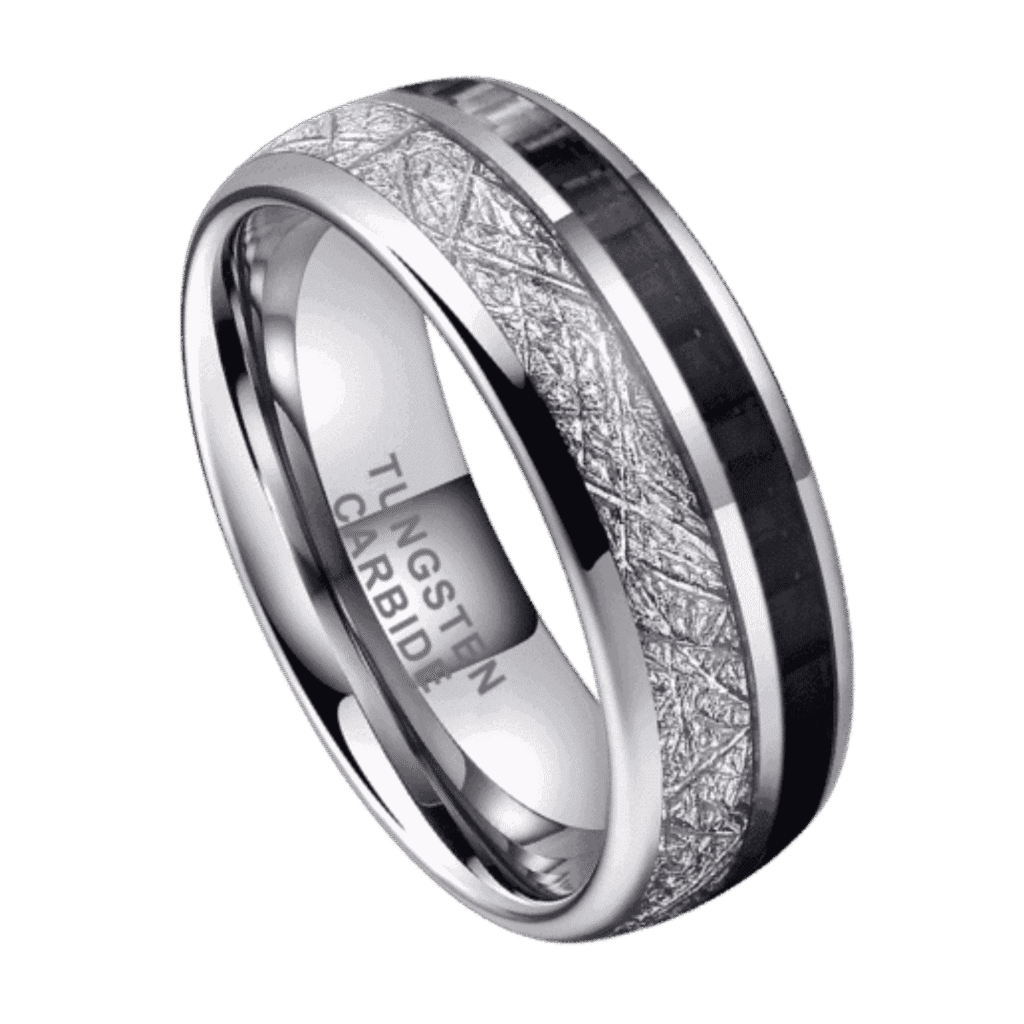
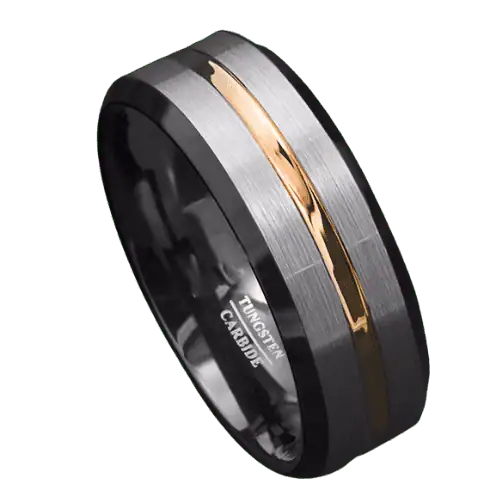
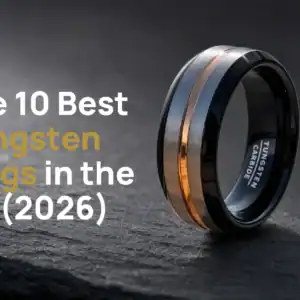
Newman Bands uses jewellery-grade tungsten carbide with a nickel binder in all tungsten rings — never cobalt. The binder is fully integrated into the sintered material — it is not a surface coating or plating, and the surface presented to skin is tungsten carbide itself, which is chemically inert. Because the nickel is bound within the sintered carbide, reactions to nickel-binder tungsten are rare.
The important caveat: for people with confirmed severe nickel allergy — particularly those who have had clinical patch testing and are known to react to very low nickel concentrations — Grade 5 titanium is the safer choice. The nickel in tungsten carbide is bound within the material matrix rather than freely available, but it is present and some highly sensitive individuals may still react.
For confirmed severe nickel allergy: Grade 5 titanium (Ti-6Al-4V) is the recommended choice. It contains no nickel. Newman Bands tungsten uses nickel binder, and while most sensitive customers wear it without issue, Grade 5 titanium is the clinically safer option for confirmed severe nickel allergy.
Platinum
Platinum is hypoallergenic in its pure form and rarely causes skin reactions. It is harder than gold (Mohs 4 to 4.5) but softer than titanium. Its primary limitation is price — platinum rings are among the most expensive available. For most sensitive-skin buyers, Grade 5 titanium offers comparable biocompatibility at a fraction of the cost.
Higher-Karat Gold
18ct gold (75% pure gold) is less likely to trigger reactions than 9ct gold (37.5% pure gold) because the higher gold content means a lower proportion of alloy metals. However, gold is not inherently hypoallergenic: the alloy metals used in gold rings (which can include nickel, copper, zinc, and silver depending on the formulation) are the potential allergens. White gold in particular often contains nickel. Always confirm the specific alloy composition with a jeweller if you are considering gold for sensitive skin.
Silicone
Silicone rings are completely hypoallergenic. Silicone is chemically inert — it contains no metal, no alloy, and no ions that can cause skin reactions. For people with extreme metal sensitivity, silicone is the only ring material that eliminates all metal contact. The trade-off is that silicone is not a dress ring and has a different aesthetic from metal rings.
Ceramic
Ceramic rings — made from zirconium oxide, the same material used in surgical tools and dental implants — are hypoallergenic and contain no nickel, cobalt, or copper. The material is chemically inert in skin contact, and at 8.5 to 9 on the Mohs scale it is one of the hardest ring materials available, one step below diamond. Newman Bands stocks ceramic rings from £55.
Metals to Avoid for Sensitive Skin
| Metal | Risk Factor | Common Allergen Present |
|---|---|---|
| Sterling silver (925) | Moderate — copper content | Copper (7.5%) |
| 9ct gold | Moderate to high depending on alloy | Nickel (in some alloys), copper |
| White gold | High in nickel-containing alloys | Nickel |
| Stainless steel (fashion jewellery) | Moderate — varies by grade | Nickel (in lower grades) |
| Fashion/costume jewellery | High | Nickel, cobalt, lead |
| Tungsten with cobalt binder | Significant for sensitive skin | Cobalt |
| Nickel silver (German silver) | High — contains no actual silver | Nickel, copper, zinc |
| Grade 5 titanium (Ti-6Al-4V) | Very low | None |
| Nickel-binder tungsten carbide | Very low | No cobalt; suitable for most wearers |
Newman Bands recommends Grade 5 titanium, nickel-binder tungsten carbide, ceramic, or silicone for customers with known metal sensitivities.
Recognising a Metal Allergy from a Ring
Contact dermatitis from ring metal allergy typically presents as one or more of the following:
Red or itchy skin under the ring. The most common early sign. Usually confined to the area of skin in direct contact with the ring.
Swelling or bumps around the ring area. May appear as small raised bumps or general puffiness under and around the ring.
Dry, cracked skin where the ring contacts. Often mistaken for eczema. Metal contact dermatitis can cause persistent dryness and cracking at the contact site.
Blistering. In more severe reactions, fluid-filled blisters may develop. Remove the ring immediately if blistering occurs.
If you experience these symptoms, remove the ring and allow the skin to recover before trying a different material. If symptoms persist after ring removal, or if the reaction is severe, consult a GP or dermatologist. A patch test can identify specific metal allergens if the cause is unclear.
What Our Customers Say
“I had an accident involving my wedding ring a good few years back, leaving me needing surgery. The scar tissue where my ring sits gave me irritation when I tried to wear my repaired wedding ring. After years of not wearing a ring I looked into alternatives, including tattoos, but decided on a "chunky" ring, one that wouldn't dig in. I couldnt have chosen better, this ring is perfect in design, no issues at all.”
lee Chaney, Cwmbran
verified Reviews.io review, May 2025 (titanium) — quoted word-for-word
“I first purchased a Tungston ring which irritated my finger but Clare was very helpful to take me through the process and eventually purchased the Titanium which fits great, feels comfortable and no irritation.”
Andrew Wilkinson, Cardiff
verified Reviews.io review, July 2025 (titanium) — quoted word-for-word
“When I married I purchased a white gold ring which I wore for 7 years without problem. Early last year my ring finger reacted badly to the nickel in the ring. Slowly my finger is getting back to normal and so I searched for a hypoallergenic ring. The ring is fantastic, although I still cannot wear one 100% of the time, it does not cause the issues that the gold one did.”
Nigel Smith, Hartlepool
verified Reviews.io review, February 2023 (tungsten) — quoted word-for-word
Frequently Asked Questions
What is the most hypoallergenic ring metal?
Grade 5 titanium (Ti-6Al-4V) is widely considered the most hypoallergenic ring metal for people with metal sensitivities. It is completely free of nickel, cobalt, and copper, and is the same alloy family as the titanium used in long-term surgical implants. For most sensitive-skin buyers, it is the recommended first choice.
Are tungsten rings hypoallergenic?
Quality tungsten rings using nickel binder (not cobalt binder) are considered hypoallergenic for the vast majority of wearers. The tungsten carbide surface is chemically inert and does not react with skin. Newman Bands uses nickel binder exclusively. However, for confirmed severe nickel allergy, Grade 5 titanium is the clinically safer choice.
Can I wear a tungsten ring if I have a nickel allergy?
Most people with nickel sensitivity wear Newman Bands tungsten rings without reaction — the nickel binder is integrated within the sintered tungsten carbide matrix, and the surface contacting skin is tungsten carbide, not free nickel. But if you have confirmed severe nickel allergy with a documented low reaction threshold, choose Grade 5 titanium: it contains no nickel at all. As Andrew’s review above shows, we will happily help you switch if you do react — that is what the 100-day returns policy is for.
Can nickel allergy develop after years of wearing a ring without problems?
Yes. Nickel sensitisation can develop over time after prolonged exposure. This is why some people react to rings they have worn for years without issue — exactly what happened to Nigel, quoted above, after seven years in a white gold band. Once nickel sensitisation occurs it is typically permanent; switching to a nickel-free metal like Grade 5 titanium resolves the issue.
Is gold hypoallergenic?
Pure gold (24ct) is hypoallergenic. The lower the gold purity, the higher the alloy content — and alloy metals (particularly nickel in white gold) are the common allergens. 18ct gold (75% pure) is less likely to cause reactions than 9ct gold (37.5% pure), but is not guaranteed safe. Always confirm the specific alloy composition if you are considering gold for sensitive skin.
Do silver rings cause skin reactions?
Sterling silver (92.5% silver, 7.5% copper) can cause skin reactions via the copper content. Copper reacts with sweat to produce copper chloride compounds, which can irritate sensitive skin. Fine silver (99.9% silver) is less reactive but impractical for ring wear due to its softness. For sensitive skin, Grade 5 titanium or nickel-binder tungsten are more reliable choices than silver.
Related Guides
Newman Bands men’s rings: browse the whole range
Newman Bands men’s titanium rings: nickel-free Grade 5 titanium
Buy Men's Rings
Related guides


Why choose Newmanbands
- 15,000+ verified reviews — 4.99★ Reviews.io, 5.0 Trustpilot
- Free 1-2 day UK delivery
- 100-day free returns
- Every size held in UK stock
- Free ring sizer sent on request
- Personalised engraving