
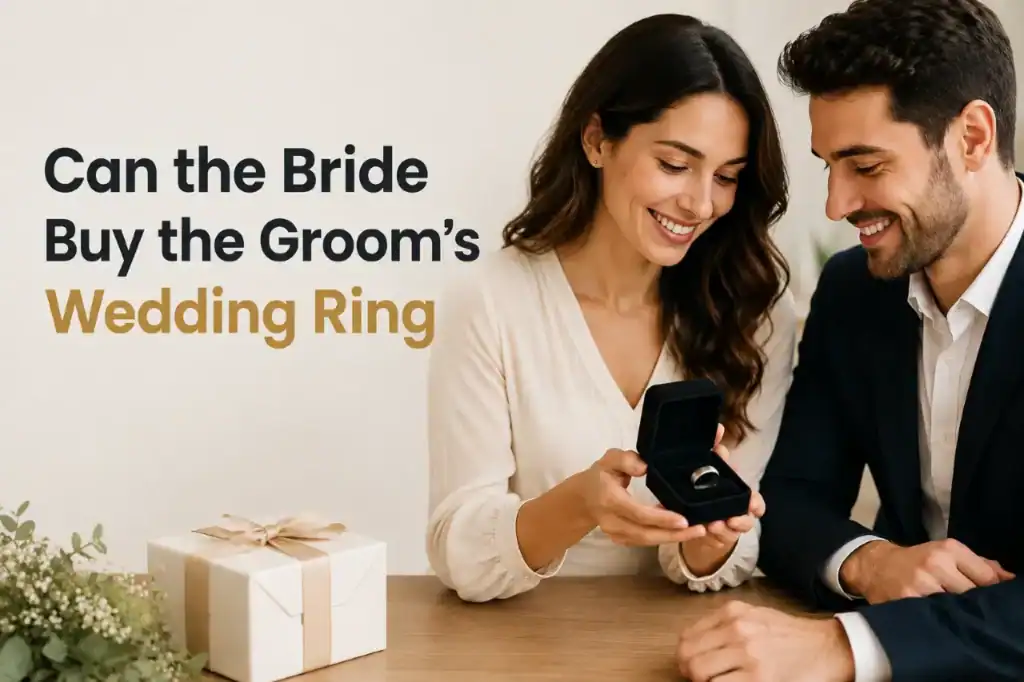
Can the Bride Buy the Groom's Wedding Ring? Tradition, Superstition and Practicality

Written by Alan MacLachlan, Owner, Newman Bands (Horsham, West Sussex)
Alan has overseen more than 100,000 ring orders since founding Newman Bands with Clare. Newman Bands is the trading name of Manzora Ltd, incorporated in 2001; it has sold men's rings since 2019, with every design and size held in stock in the UK and same-day dispatch on orders before 5pm — most orders arrive within one to two days. Alan personally answers customer queries on metal selection and ring choice every week. Newman Bands has more than 15,000 verified customer reviews — rated 4.99 out of 5 on Reviews.io and 5.0 on Trustpilot.
Yes — and in many UK and European traditions, the bride traditionally does buy the groom’s ring. This guide covers what tradition actually says, why the superstitions around this question have no real basis, and how to buy a wedding ring for someone else without getting the size wrong.
In this guide
What Does Tradition Actually Say?
In traditional UK and many European wedding customs, the couple exchange rings — and each is responsible for buying the other’s. The groom buys the bride’s ring; the bride buys the groom’s. This exchange model is well established in British, Irish, and most Western European wedding practice.
Modern couples often approach it differently: some buy rings jointly, some split the cost, some give the decision to whoever has stronger preferences about style. None of these approaches is wrong. The tradition of separate purchases is simply less observed today, particularly among younger couples who approach weddings as a shared financial project rather than a series of separate gendered responsibilities.
What the tradition does not say is that the groom must buy his own ring, or that the bride purchasing it is unusual. In many families and communities, the bride buying the groom’s ring is precisely what tradition calls for.
The Superstitions — and Why They Do Not Hold Up
Some people worry that the bride buying the groom’s ring is bad luck. This is not an established superstition with any consistent cultural origin. Most ring-related superstitions centre on things like dropping the ring at the altar, wearing the engagement ring on the wedding day, or the rings being lost before the ceremony — not on who purchased them.
The idea that the bride buying the groom’s ring is unlucky appears to be a modern confusion rather than a transmitted cultural belief. Who pays for a ring has no effect on what the ring represents, how it will wear, or how the marriage will go. The meaning comes from the exchange, not the payment method.
Short answer on superstitions: There is no established superstition about the bride buying the groom’s ring. In many traditions, she is supposed to.
Practical Advice: How to Buy a Wedding Ring for Someone Else
The practical challenge is getting the size right when you are buying without the groom knowing. Here are the four methods that work:
For what it is worth, you are not unusual for not knowing. About one buyer in thirteen tells us at checkout that they do not know the ring size, and counting people who order a sizer on its own, sizing help touches roughly one order in ten. Buying for someone else is the most common reason.
And if you genuinely cannot find out and have to guess: T is the single best guess for a UK man’s ring, because it is the middle size across the rings we ship. Sizes S to U account for about a third of every ring we ship, and the wider P to W band covers nearly three-quarters of them. A guess inside that range is far likelier to be close than one outside it — and with the 100-day return policy a non-engraved ring can always be exchanged if it is out — size exchanges are free and unlimited.
Ask directly. The simplest option. Many modern couples choose rings together, which removes sizing and style risk entirely. If the groom already knows a ring is being bought for him, this is always the most reliable method.
Borrow a ring he already wears. If he wears a ring on the intended finger — even occasionally — borrow it, measure the internal diameter with a ruler, and convert to a UK ring size using our UK ring size chart. This method works well and does not require him to know you are buying.
As a rough guide, an internal diameter of 19.4mm is a UK size T and 19.8mm is a U. If you want the full method rather than the shortcut, we walk through it in how ring size is measured.
Use the free Newman Bands ring sizer. Select the ring you want to order, choose “I don’t know my ring size” from the dropdown, and check out. We send a free ring sizer. If you can arrange for him to use it without knowing why, you get his exact size. The whole process from ordering the sizer to receiving the ring can be completed in around three days.
Order and use the return policy. Choose the most likely size, order a non-engraved ring, and use Newman Bands’ 100-day return policy to exchange for the correct size if needed — size exchanges are free and unlimited, and returns are free within 100 days.
For a surprise purchase, the most reliable method is borrowing a ring he already wears on the intended finger and measuring the internal diameter — this gives an exact measurement without requiring his involvement. If borrowing a ring is not possible, the Newman Bands free ring sizer is the next most reliable option.
Important: If you are ordering an engraved ring without a confirmed size, be aware that personalised items are excluded from standard return rights under UK Consumer Contracts Regulations 2013. Confirm the size before ordering an engraved ring.
Choosing the Right Ring: Material Guide
The bride choosing the groom’s ring also means making the material decision. Here is what matters most for a ring that will be worn every day for decades:
| Material | Hardness (Mohs) | Scratch Resistance | Safe-break design? | Can It Be Resized? | Typical Price at Newman Bands |
|---|---|---|---|---|---|
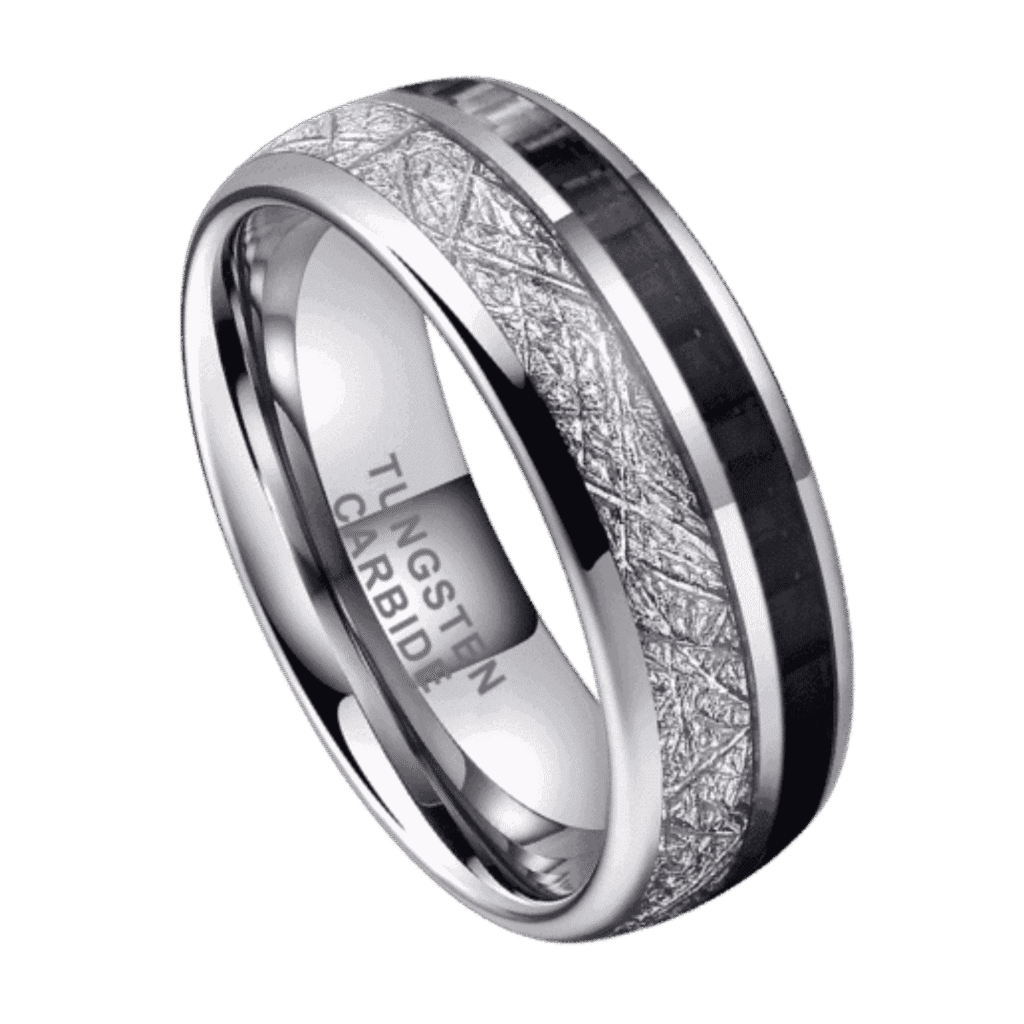
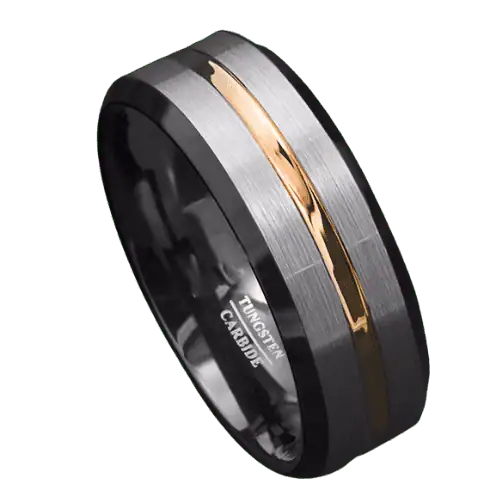
| Tungsten carbide | 9 | Exceptional — resists daily wear | No | No | From £52 |
| Grade 5 titanium (Ti-6Al-4V) | 6 | Very good | No | No | From £48 |
| Silicone | Flexible | Scuffs but does not scratch | Yes — snaps under avulsion force to protect the finger | Not needed — flexible fit | £18 |
| 9ct gold | Much softer — see note below | Poor — scratches visibly in daily use | No | Yes | Significantly higher |
| 18ct gold | Much softer — see note below | Poor — scratches visibly in daily use | No | Yes | Premium price |
| Ceramic (zirconia) | 8.5–9 | Excellent — holds a polish | No | No | From £55 |
For a groom who works with his hands, does physical work, or is generally hard on jewellery, tungsten carbide at Mohs 9 is the most practical choice. It will not scratch from tools, machinery, or everyday objects. Grade 5 titanium is lighter and highly durable for most lifestyles. Gold is resizable, which matters if weight gain or loss is expected, but it scratches visibly within weeks of daily wear.
A note on the hardness column. We have not given a Mohs figure for gold, because it is not a useful measure for it. Mohs 2.5 is the hardness of pure 24ct gold; the alloys used in jewellery are harder than that, and trade sources genuinely disagree on whether 9ct or 18ct comes out on top — jewellers use the Vickers scale instead, and the figure shifts depending on the alloy and whether the metal has been annealed or work-hardened. What is not in dispute is the part that matters to you: every carat of gold is far softer than tungsten carbide and will pick up visible scratches in daily wear. Titanium at Mohs 6 sits between the two — tougher and lighter than gold, though not as scratch-proof as tungsten.
What Our Customers Say
“Absolutely stunning ring! Ordered to be used as my partners wedding band and received well packaged in 3 days. Really good quality ring, nice and heavy, and looks lovely on. Just a shame he has to wait another 3 months to wear it!”
Becky Craze, London
verified customer review — quoted word-for-word
“Lovely ring, just what I was looking my husband wanted. I love the style, it looks smart and expensive but was actually a very good price. I would absolutely buy from Newman Bands again”
Rebecca May, Mansfield
verified customer review — quoted word-for-word
“Lovely ring, this ring looks even better than my husbands original gold wedding band! Wish I would have just ordered one at the start! Nice thick ring but not too thick and 4mm is the perfect width!”
Paige Wilde
verified customer review — quoted word-for-word
Frequently Asked Questions
Is it tradition for the bride to buy the groom's ring?
In many UK and European traditions, yes — the couple exchange rings, and each is responsible for buying the other’s ring. The bride buying the groom’s ring is the traditional approach in these customs, not an unusual one.
Is it bad luck for the bride to buy the groom's ring?
No. This is not an established superstition with any traceable cultural origin. In many traditions, the bride is specifically supposed to buy the groom’s ring. Who purchases a ring has no effect on its meaning or on the marriage.
Does the groom have to wear a wedding ring?
No. Whether men wear wedding rings is a personal choice. Traditionally, men in Western culture did not wear wedding rings; this changed significantly during and after the Second World War and is now the norm for most UK couples. Today a wedding ring for the groom is standard practice in the UK, but it is not a legal or religious requirement in most contexts.
What is the average price for a groom's wedding ring?
Prices vary considerably. Newman Bands’ wedding bands start at £48 for titanium and £52 for tungsten, which are the most popular choices. Gold rings start significantly higher due to the metal cost. The quality and durability of the ring matter more than the price point.
How do I find his ring size without him knowing?
The most reliable methods: borrow a ring he already wears on the intended finger, measure the internal diameter, and convert to a UK size using a size chart. Alternatively, use Newman Bands’ free ring sizer service — select the ring, choose “I don’t know my ring size” at checkout, and we send a free sizer. If he can use it without knowing why, you get his exact measurement. The full process from sizer to ring takes around three days.
Can I engrave the ring if I'm ordering it as a surprise?
Confirm the size before ordering an engraved ring. Personalised items are excluded from standard return rights under UK Consumer Contracts Regulations 2013, so an engraved ring ordered in the wrong size cannot be returned. Newman Bands offers a practical solution: order the plain ring first to confirm the fit, return it for engraving once the size is confirmed, and we engrave and dispatch the same day.
What if the ring does not fit?
All non-engraved Newman Bands rings are covered by a 100-day return policy, and size exchanges are free and unlimited. If the size is not right, exchange it for the correct size. Tungsten and titanium rings cannot be resized, so the exchange process is the standard solution for a size correction.
Related Guides
Men’s ring size guide UK: the UK ring size measuring guide
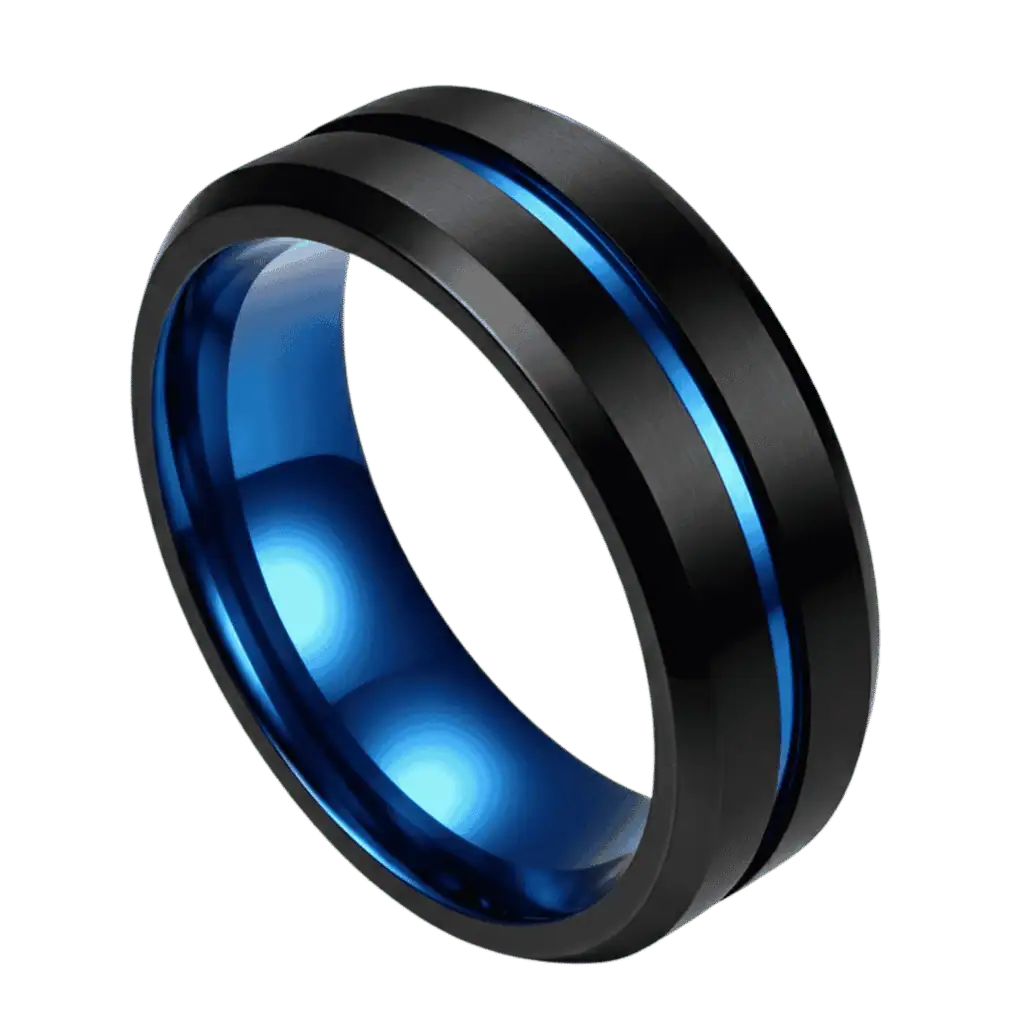
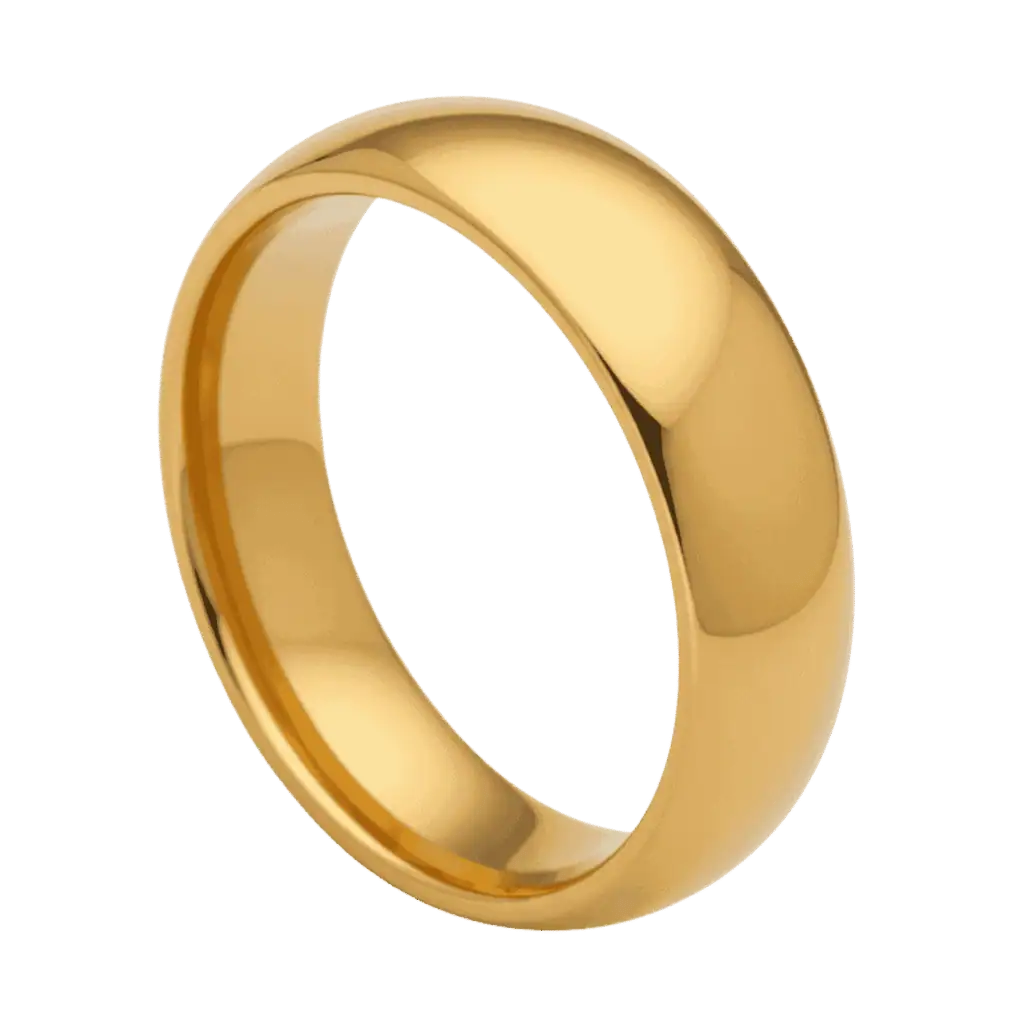
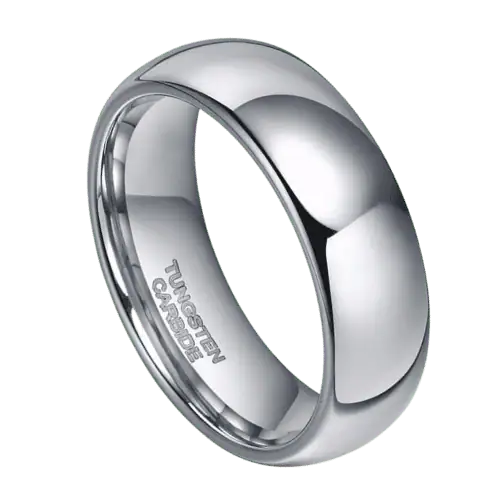
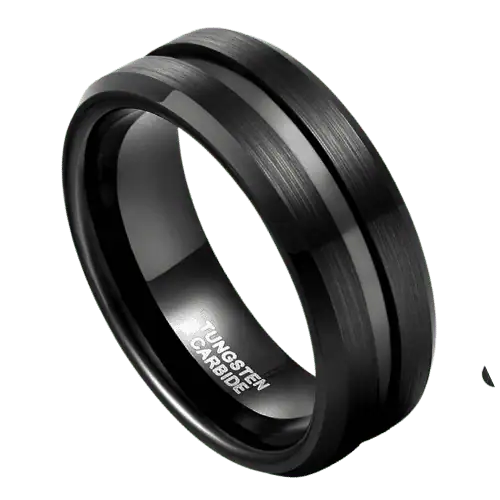
Newman Bands men’s rings: browse the wedding bands
Buy Men's Rings
Related guides
Why choose Newmanbands
- 15,000+ verified 5-star reviews
- Free 1-2 day UK delivery
- 100-day free returns
- Every size held in UK stock
- Free ring sizer sent on request
- Personalised engraving