

Which Finger Should You Wear a Ring On? Complete Ring Placement Guide

Written by Alan MacLachlan, Owner, Newman Bands (Horsham, West Sussex)
Alan has overseen more than 100,000 ring orders since founding Newman Bands alongside Clare MacLachlan. Newman Bands is the trading name of Manzora Ltd, founded in Horsham, West Sussex in 2001. The business has sold rings since 2019, with every design and size held in stock in the UK — most orders arrive within one to two days of dispatch. Alan personally answers customer queries on metal selection and ring choice every week. Newman Bands has over 10,000 verified five-star reviews on Trustpilot and Reviews.io.
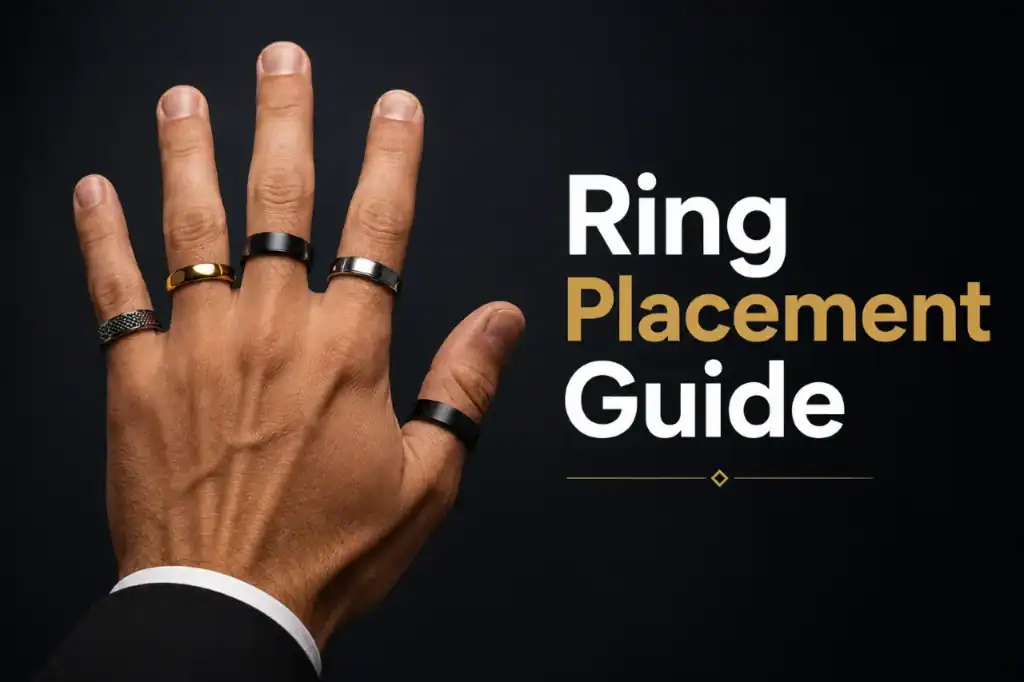
Most finger placements for rings have no fixed meaning — they are fashion choices. A small number carry recognised cultural or community significance. This guide covers every finger on both hands, what each placement is understood to mean in the UK, where cultural and religious traditions differ, and how to think about ring placement for purely decorative wear.
In this guide
Left Hand — Finger by Finger
Left Ring Finger
The most culturally loaded finger placement in Western tradition. In the UK and most of Western Europe, the left ring finger is the accepted home for both engagement rings and wedding bands. Both partners typically wear their ring on this finger.
The origin is the Roman concept of the “vena amoris” — a vein of love believed to run from this finger directly to the heart. Anatomically, this is not accurate: all fingers share the same basic vascular structure. The tradition persists regardless of its anatomical basis, and the left ring finger remains unambiguously associated with marriage and commitment in UK culture.
Left Middle Finger
No established cultural meaning in the UK. The middle finger is the largest and most central on the hand, which makes it visually prominent for ring wear. It is a popular fashion choice for statement pieces and stacking rings. No symbolic reading should be applied to a ring worn here.
Left Index Finger
In some cultures and historical periods, the index finger was the traditional ring finger for signet rings, family crests, and authority rings. In certain Middle Eastern and South Asian traditions, the wedding ring is worn on the left index finger. In modern UK fashion use, the index finger is popular for bold statement rings and makes a strong visual impact.
Left Little Finger (Pinky)
In British tradition, signet rings bearing family crests or initials are worn on the left pinky finger. This placement has a long history in the UK and remains associated with family heraldry. The cultural association with organised crime visible in films and television is largely fictional — the reality is a traditional signet ring indicating family or professional status. For fashion wear, the pinky is popular for slim, delicate rings.
Right Hand — Finger by Finger
Right Ring Finger
In several Central and Eastern European countries — including Germany, Poland, Russia, Greece, and India — the wedding ring is worn on the right ring finger rather than the left. For UK residents with roots in these traditions, or who married in these countries, a ring on the right ring finger is likely a wedding band.
There is also a less widely known convention in some open-relationship communities where a black ring on the right ring finger is used as a discreet signal — but this is a self-selecting minority use with no formal organisation behind it. The majority of people wearing a ring on this finger are doing so for aesthetic reasons or cultural tradition. For the full context on this placement, see our guide: “What Does a Black Ring on the Ring Finger Mean?” (newmanbands.com).
Right Middle Finger
The right middle finger is the recognised placement for the asexual community ring — a plain black ring worn by members of the asexual community as a visible symbol of asexual identity. This convention is associated with AVEN (the Asexual Visibility and Education Network) and is the most consistently recognised asexual ring placement. For a full explanation of the symbol, its history, and what it means, see our guide to the asexual ring meaning.
Outside this community context, the right middle finger has no established cultural meaning in the UK and is a popular fashion choice for statement rings.
Right Index Finger
Historically associated with status rings, signet rings, and in archery traditions, the draw finger was sometimes protected with a ring. In modern UK use, the right index finger is a strong fashion placement — the pointing finger is naturally visible, which makes it ideal for rings you want to be seen. No established symbolic meaning in contemporary UK culture.
Right Little Finger (Pinky)
Like the left pinky, the right pinky is associated with signet ring tradition in the UK. Either hand is acceptable for signet rings; right is slightly more commonly seen in contemporary wear. Also popular for fashion rings: slim bands and delicate statement pieces work well on the pinky of either hand.
Thumbs (Either Hand)
Increasingly popular for bold statement rings. Thumbs have no established cultural or symbolic meaning for ring wear in the UK. In some ancient and cross-cultural contexts, rings on the thumb indicated wealth, status, or self-assertion — but none of these meanings are recognised in modern British society. Thumb rings are a purely fashion-led choice, and an effective one for people who want visible, wearable statement pieces.
Complete Finger Reference Table
| Finger | Hand | Established UK Meaning | Common Fashion Use |
|---|---|---|---|
| Ring finger | Left | Wedding band, engagement ring, commitment ring | Yes |
| Ring finger | Right | Wedding ring (Eastern/Central European tradition) | Community signal (minority use) | Yes |
| Middle finger | Left | None | Popular for statement rings and stacking |
| Middle finger | Right | Asexual community ring (plain black ring) | No meaning otherwise | Popular for statement rings |
| Index finger | Left | Signet ring (historical) | Some cultural wedding traditions | Bold statement rings |
| Index finger | Right | None established in modern UK use | Bold statement rings, highly visible |
| Little finger (pinky) | Left | Signet ring tradition | Slim, delicate rings |
| Little finger (pinky) | Right | Signet ring tradition | Slim, delicate rings |
| Thumb | Either | None in modern UK context | Bold statement rings |
Religious and Cultural Variations
Ring placement varies meaningfully across religious and cultural traditions. Understanding these variations avoids misreading what a ring placement means when cultural context is different from the UK default.
Islam. In Islamic tradition, silver rings are permitted for men; gold is forbidden for men (though permitted for women). Muslim men who wear rings typically wear them on the right hand, with the right index or right ring finger both accepted. There is no single fixed rule across all schools of Islamic jurisprudence. For a full treatment of ring-wearing conventions in Islam, see our guide to men wearing rings in Islam.
For a full treatment of ring-wearing conventions in Islam including which metals are permissible and which fingers are recommended, see our guide: Men Wearing Rings in Islam at newmanbands.com/men-wearing-rings-in-islam/
Orthodox Christianity (Greek, Russian, Serbian, Romanian). In Orthodox Christian tradition, the wedding ring is worn on the right ring finger, not the left. This applies across most Eastern Orthodox churches and is the source of right-ring-finger wedding ring wear in countries including Greece, Russia, Poland, Germany, and India. A ring on the right ring finger for someone from these traditions is almost certainly a wedding band.
Jewish tradition. In traditional Ashkenazi Jewish wedding ceremonies, the ring is placed on the bride’s right index finger during the ceremony. After the ceremony, it is typically moved to the left ring finger. The right index finger placement during the ceremony is a specific ritual act, not a permanent wearing convention.
Hindu tradition. In Hindu culture, the right hand is generally the auspicious hand for ceremonial actions. Wedding rings, where worn, are sometimes placed on the right hand for women. Men’s ring-wearing conventions vary considerably across South Asian communities and are less standardised than Western conventions.
Key principle: In the UK default, the left ring finger means marriage or commitment. All other placements are either fashion choices or culturally specific traditions. Never assume meaning from a ring placement without cultural context.
Ring Placement for Fashion Rings
For fashion rings with no ceremonial or symbolic purpose, the only rule is that the ring should look and feel right to the person wearing it. Some practical guidance for placement decisions:
Bold or statement rings. Index finger and thumb are the strongest fashion placements. These fingers are naturally prominent in gesture and movement, making statement pieces more visible. Wide bands and oversized rings work well here.
Slim stacking rings. Multiple fingers including the ring, middle, and index fingers suit stacking. The visual interest comes from variety across the hand rather than a single strong placement.
Signet-style rings. Traditionally pinky or index finger. Either works in modern fashion contexts; the pinky gives a more traditional read while the index finger is bolder and more contemporary.
Wide bands. The ring finger and middle finger suit wide bands visually. Wide rings on pinkies can look crowded and may be less comfortable on a thinner finger.
Size considerations. Ring sizes differ between fingers. Always measure the specific finger you intend to wear the ring on — the same-size ring will fit differently on the ring finger versus the middle finger on the same hand.
Customer Stories
“It is the wedding ring I wear most of the time. Very comfortable and the perfect blend of something modern yet meaningful.”
Steven Carr
verified Newman Bands customer
“Just got my Raven Titanium Wedding Ring and I'm delighted. Fast, secure delivery and top quality — sleek, durable, and looks ace. Personalised engraving was a nice touch too.”
Niel Herdman
verified Newman Bands customer
Frequently Asked Questions
Which finger do you wear a fashion ring on?
Any finger. Fashion rings have no conventional placement rules. The index finger and thumb are increasingly popular for statement pieces. Multiple fingers are used for stacking ring sets. Wear rings where they look and feel best to you.
What does a ring on the right ring finger mean?
In the UK default context, it most likely means a decorative ring with no specific meaning. If the wearer has Central or Eastern European heritage, it may be a wedding ring — this is the standard wedding ring finger in countries including Germany, Russia, Greece, and Poland. In a minority of cases, a black ring on the right ring finger may be used as a community signal in open-relationship communities.
What does a ring on the right middle finger mean?
Most commonly, a fashion choice with no symbolic intent. The right middle finger is also the recognised placement for the asexual community ring — a plain black ring worn as a symbol of asexual identity. For a full explanation of this symbol, see our guide to the asexual ring meaning.
Is there a wrong finger to wear a ring on?
No. The only contexts where placement carries real significance are cultural or religious traditions and community symbols. For everyday fashion wear, wear rings wherever they feel and look best. There is no wrong choice.
Do ring sizes differ between fingers?
Yes. Fingers on the same hand often differ in size, sometimes significantly. Always measure the specific finger you intend to wear a ring on rather than estimating from another finger. Newman Bands’ free ring sizer service removes the guesswork.
Related Guides
Men’s ring finger guide: newmanbands.com/mens-ring-finger-guide
Newman Bands men’s rings: newmanbands.com/mens-rings/
Buy Men's Rings




Related guides




Why choose Newmanbands
- 10,000+ verified 5-star reviews
- Free 1-2 day UK delivery
- 100-day free returns
- Every size held in UK stock
- Free ring sizer sent on request
- Personalised engraving