

Men's Pinky Ring Guide: Meaning, Style and UK Tradition

Written by Alan MacLachlan, Owner, Newman Bands (Horsham, West Sussex)
Alan has overseen more than 100,000 ring orders since founding Newman Bands with Clare. Newman Bands is the trading name of Manzora Ltd, incorporated in 2001; it has sold men’s rings since 2019, with every design and size held in stock in the UK and same-day dispatch on orders before 5pm — most orders arrive within one to two days. Alan personally answers customer queries on metal selection and ring choice every week. Newman Bands has more than 15,000 verified customer reviews — rated 4.99 out of 5 on Reviews.io and 5.0 on Trustpilot.
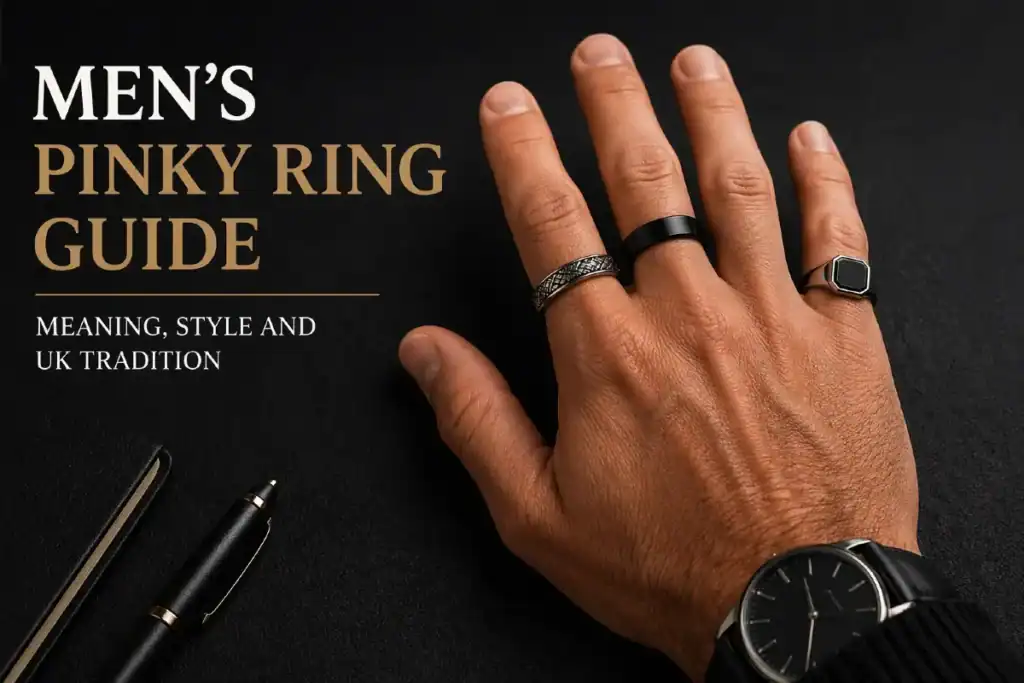
A men’s pinky ring is one of the oldest ring-wearing traditions — and one of the most misunderstood. It does not mean what many people assume. The meaning depends entirely on the type of ring, the context, and the wearer.
At Newman Bands, pinky ring questions are among the most common we receive. Men ask about signet rings, which hand and finger to use, and what width suits the little finger. This guide covers all of it.
The short answer: left pinky is the UK convention for signet rings. A slim 4mm–6mm band suits the little finger. Any man can wear one — no status or occasion required.
In this guide
What Is a Pinky Ring?
A pinky ring on a man traditionally signals family heritage (via signet rings), professional affiliation, or modern style confidence. There is no single meaning — context and ring type determine the message. The left pinky is the UK convention; the right pinky is equally acceptable for modern fashion rings.
The little finger: The pinky is the smallest finger on the hand, sitting on the outside. It is narrow — typically a UK ring size J to L. Because the finger is small, ring width matters considerably. A ring that looks slim on the hand can look large on the pinky.
Width guide: For the pinky, 4mm to 6mm wide is the practical sweet spot. An 8mm ring looks disproportionate on most men’s little fingers. A 4mm flat band from our range of men’s rings is a clean, comfortable all-day choice.
Profile: A flat or court (slightly domed) profile suits the pinky better than a high-dome profile. The lower the profile, the less the ring catches on clothing and adjacent fingers.
Ring size: The pinky is the most size-variable finger on the hand — it is frequently narrower than men expect, and the gap between the pinky and the ring finger is often larger than you would guess. Many first-time pinky ring buyers order the wrong size because they estimate from their ring finger. Always measure the little finger specifically, ideally at the end of the day when fingers are slightly larger. Our guide to measuring ring size at home explains how to do it accurately.
The History of Pinky Rings
Men have worn rings on the little finger for thousands of years. In ancient Egypt, Rome, and Greece, pinky rings served as wax seals for documents. In Victorian and Edwardian Britain, the pinky ring became a marker of class, status, and family. That tradition continues today, though the social meaning has broadened considerably.
Ancient use: Signet rings on the little finger were practical tools — a personal seal pressed into wax to authenticate documents. The ring represented identity and authority.
Victorian Britain: The pinky ring became associated with the upper and upper-middle classes. A family crest signet ring on the left pinky was a marker of lineage.
20th century: The class association of pinky rings persisted through most of the 20th century. Some men wore rings on the right pinky to signal that they were unmarried — an upper-class convention that has largely faded.
Modern adoption: Today, pinky rings are worn across social groups. The association with a specific class has softened. A man wearing a plain 4mm tungsten band on his pinky is making a personal style choice, not a class statement.
At Newman Bands, pinky ring customers range from apprentice tradesmen to executives — the breadth of who buys them reflects how widely the convention has spread.
Signet Rings on the Pinky
In British tradition, the left pinky is the conventional finger for a signet ring. Signet rings were historically worn on the dominant hand’s little finger to allow easy access for wax-sealing documents. For right-handed men, left pinky became the standard.
What is a signet ring: A signet ring has a flat face — called the table — engraved with a family crest, monogram, or personal symbol. The face is designed to be pressed into wax. Today, most are decorative rather than functional, but the tradition remains.
Engraving: Newman Bands can engrave rings with initials, dates, and short personal messages. A plain flat band in tungsten or titanium engraved with a monogram achieves the look of a traditional signet ring at a fraction of the price of a precious metal alternative.
Engraving and returns: Personalised and engraved rings are excluded from the right to return under UK Consumer Contracts Regulations 2013, as they are made to personal specification. Newman Bands offers a 100-day free return on non-engraved rings, with free unlimited size exchanges. The advice is always to try the ring on the intended finger before ordering engraving.
Modern Reasons Men Wear Pinky Rings
Pinky rings are versatile — appropriate for formal occasions via the signet tradition, professional settings, and everyday fashion. There is no age restriction or social barrier to wearing one in modern Britain.
Family heritage: Inheriting a grandfather’s signet ring and wearing it on the left pinky is a completely natural choice. The convention provides clear guidance.
Fashion confidence: A small ring on the little finger is less committing than a full knuckle or statement ring. It is visible without being dominant. Many men wear their first fashion ring on the pinky for this reason — our guide to whether rings look good on men covers how to make one work with the rest of your look.
Avoiding wedding ring signals: Wearing a ring on the pinky does not signal married status in UK culture. Men who want to wear a ring without it being read as a wedding band often choose the pinky or right hand.
Statement without excess: A 4mm titanium band on the pinky adds to a man’s overall look without overwhelming it. It is the easiest way to start wearing rings.
What Type of Ring Suits the Pinky?
A slim band (4mm–6mm wide) with a low profile suits the pinky best. Flat court or flat bands in tungsten or titanium work well. Very wide bands (8mm+) and high-domed profiles look disproportionate on the little finger.
| Ring Style | Pinky Suitability | Reason |
|---|---|---|
| Flat band, 4mm | Excellent | Low profile, comfortable all day, proportional |
| Flat band, 6mm | Good | Visible but not overwhelming |
| Court band, 4–6mm | Good | Comfort fit; slightly rounded edge |
| Textured band, 4–6mm | Good | Adds interest while staying slim |
| Wide band, 8mm+ | Poor | Too wide for most little fingers |
| High-dome court, any width | Fair | Comfort good; visual bulk moderate |
| Silicone band, slim | Good | Active and work environments |
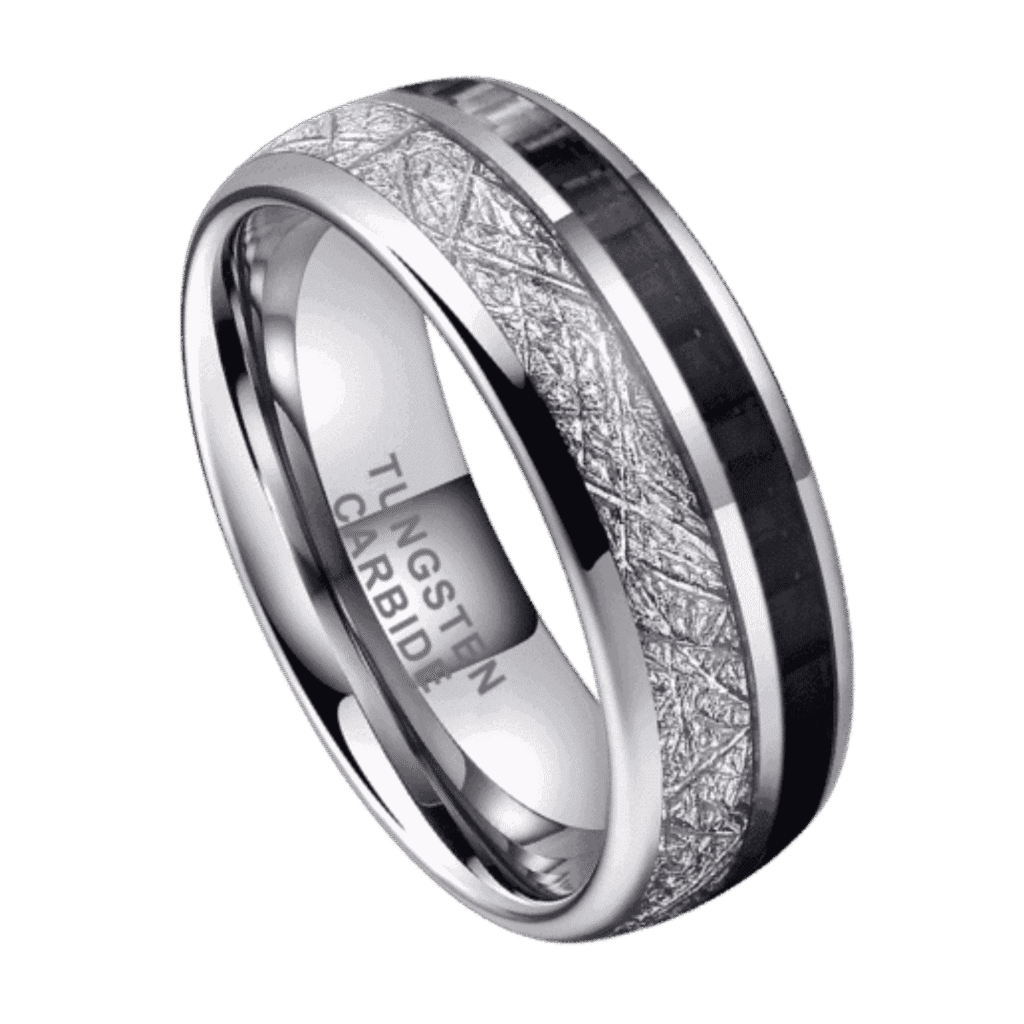
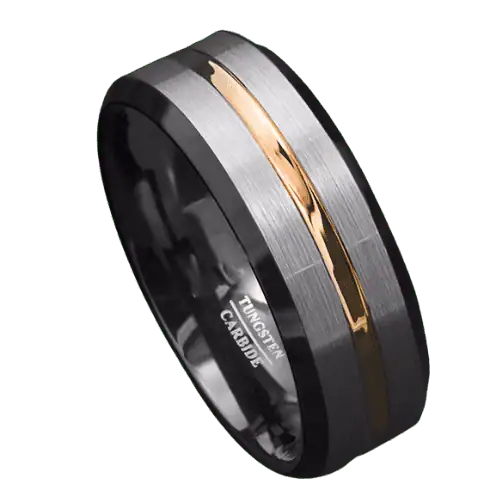
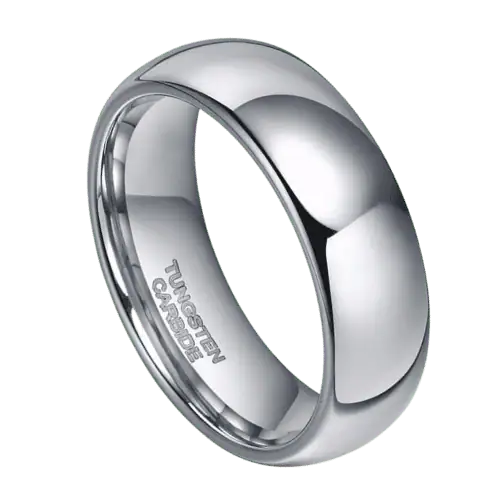
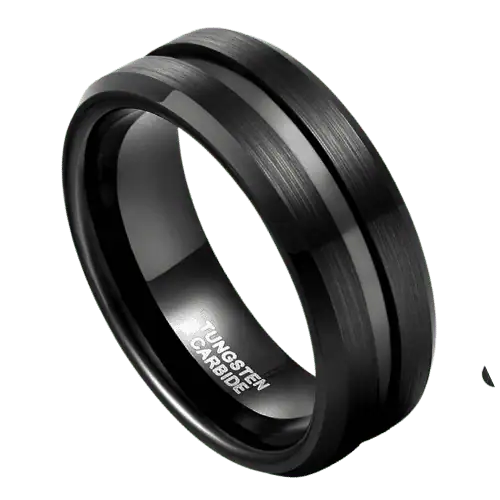
Material note: Tungsten carbide is Mohs 9 — near scratch-proof and ideal for daily wear, including a pinky ring. The limitation is that tungsten cannot be resized. For the pinky, where sizing can be snug, this matters. Titanium at Mohs 6 is scratch-resistant and can be adjusted by some jewellers. For a first pinky ring, titanium reduces the risk if sizing needs adjustment.
UK Pinky Ring Tradition
In the UK, the left pinky is the conventional finger for a signet ring. For modern fashion rings, either hand is acceptable. Right pinky rings carry no negative connotation in contemporary British culture.
The class association of pinky rings has softened considerably in modern Britain. A pinky ring is worn across social groups. No special occasion or social status is required.
In professional engineering, some traditions see rings worn on the working hand’s little finger to mark professional milestones. This is not standard UK practice but is acknowledged in some technical professions.
The Iron Ring ceremony is a Canadian tradition for engineers, and similar professional ring conventions exist in other fields. These are distinct from the general fashion or fashion-statement use of pinky rings in the UK.
“The ‘Try at Home’ rings idea worked out really well, allowing us to choose the right wedding band. Turnaround times on all occasions were fast and returning the items was easy.”
Kerry Taylor, Northwich
verified customer review — quoted word-for-word
Frequently Asked Questions
What does a pinky ring mean for a man?
A pinky ring traditionally indicates family heritage via a signet ring, professional membership, or personal style. In modern Britain, there is no single fixed meaning. The ring’s design and context matter more than the finger.
Should a man wear a ring on his pinky?
Yes — if the style suits him. Pinky rings are a well-established British tradition and require no special occasion or social status to wear. A slim 4mm–6mm band or signet ring on the left pinky is always appropriate.
Which hand does a pinky ring go on?
In UK tradition, the left pinky is conventional — especially for signet rings. Either hand is acceptable for modern fashion rings. There is no negative association with wearing one on the right pinky.
What is the difference between a pinky ring and a signet ring?
A signet ring is a specific style with a flat engraved face — a crest, monogram, or symbol — traditionally worn on the pinky. A pinky ring is any ring worn on the little finger. Not all pinky rings are signet rings, but most signet rings are worn on the pinky.
Not sure of your little finger size? Request a free ring sizer
Men’s ring finger guide: which finger to wear a ring on
Related Guides
Ring size chart: UK men’s ring sizes explained
Men’s tungsten rings: browse the tungsten collection
Men’s titanium rings: browse the titanium collection
Buy Men's Rings

Related guides

Why choose Newmanbands
- 15,000+ verified reviews — 4.99★ Reviews.io, 5.0 Trustpilot
- Free 1-2 day UK delivery
- 100-day free returns
- Every size held in UK stock
- Free ring sizer sent on request
- Personalised engraving