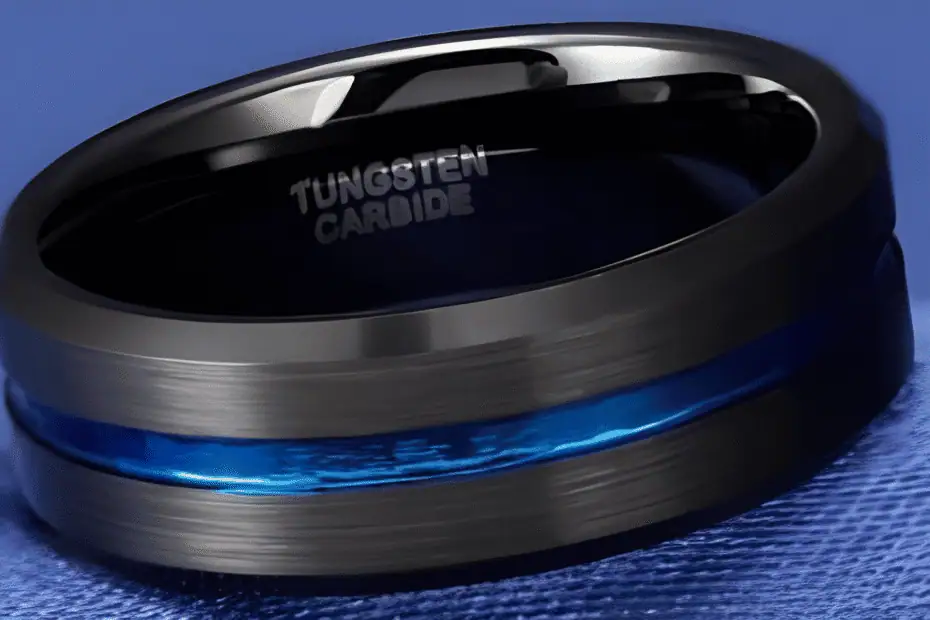
Strength & Durability
When it comes to longevity against the wear and tear of daily life, there is no contest: Tungsten is vastly superior to Gold.
- Tungsten Carbide is consistently rated as the hardest metal used in jewellery, scoring approximately 9 on the Mohs scale of hardness, second only to diamond (10). This extreme hardness means it is virtually scratch-proof and will not bend, dent, or lose its shape under pressure.
- Gold is a naturally soft, malleable metal, scoring only 2.5 to 3.5 on the Mohs scale. While 14K or 18K gold alloys are harder than pure gold, they are still easily scratched by common household items, tools, and even grit or keys. Gold rings will inevitably accumulate visible scratches and bend or dent over time, especially if worn during heavy labour or intense workouts.
For active men, or anyone who works with their hands, tungsten is the clear ideal. It retains its polished, mirror-like finish for decades without maintenance. (Want more proof? Learn about: Do tungsten rings scratch?)
Price Comparison
The difference in cost between these two materials forms one of the most compelling arguments for choosing tungsten, particularly for buyers seeking exceptional quality without the premium price tag of a precious metal.
Gold: A Commodity with Intrinsic Value
Gold’s pricing is driven by its status as a precious commodity. This means the price of a gold ring is determined by three main factors:
- Global Market Value: As gold is a finite, rare element, its price fluctuates daily on the global commodities market. This intrinsic value dictates the base cost of the metal used in the ring.
- Purity (Karat Weight): The higher the karat (e.g., 18K versus 9K), the higher the percentage of pure gold and, consequently, the higher the price. You are paying for the actual percentage of gold content.
- Retail Markup: Because gold rings represent a traditional luxury good, they often carry a higher retail margin, further inflating the final cost.
This combination makes gold rings a significant financial investment, with costs often ranging from four to ten times higher than a comparable tungsten band.
Tungsten: Engineered Value and Abundance
Tungsten carbide, by contrast, is an engineered alloy that is abundant and primarily used for high-performance industrial applications (like cutting tools). This fundamental difference drives down the cost considerably:
- Material Abundance: Tungsten is significantly more common and easier to source than gold, eliminating the scarcity factor that drives gold’s price.
- Affordability Without Quality Sacrifice: While tungsten rings are far cheaper, the lower price does not reflect inferior quality or durability. Instead, the buyer is paying for the ring’s superior craftsmanship, design, and performance features (like scratch resistance), rather than the intrinsic value of the raw material.
- Long-Term Value: While gold holds a higher resale value (the value of the metal if it were melted down), tungsten holds a higher practical value. It saves the buyer money on initial purchase, requires no maintenance, and offers superior longevity, making it the more practical choice for long-term daily wear.
While some buyers prefer the sentiment of knowing they are wearing “real gold,” the economic reality is that tungsten provides a practical, high-performance ring that achieves an equally high-end aesthetic at a fraction of the cost.
Comfort & Daily Wear
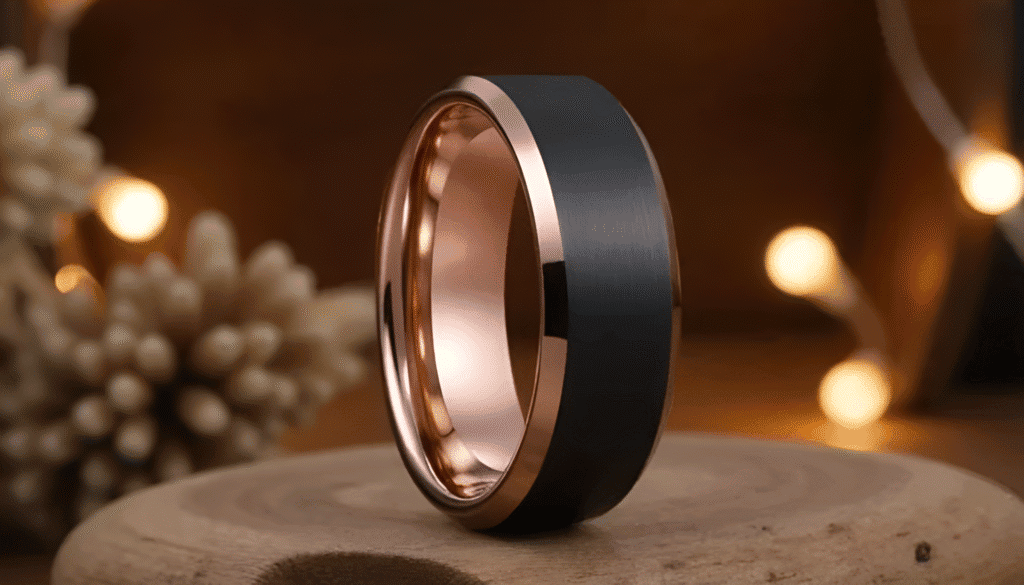
While durability is key to a ring’s survival, comfort is the key factor that determines whether a man actually wears his wedding band every single day. The materials’ innate density and hardness dramatically affect the wearer’s daily experience.
Tungsten: Solid, Grounded, and Consistent
Tungsten carbide is classified as a dense metal. In fact, its density is comparable to that of 18K gold. This high density translates directly into the ring’s feel:
- Substantial Heft: A tungsten ring possesses a definite, satisfying weight or “heft.” Many men prefer this solid, grounded feel because it provides a constant, reassuring presence on the finger. It feels expensive and robust.
- Constant Shape: Because tungsten is virtually indestructible and does not bend, it retains its perfect shape indefinitely. This is a crucial comfort feature; the ring will never deform into an oval or cause uneven pressure points on the finger, ensuring a perfectly consistent fit over time.
- Thermal Inertia: Tungsten’s hardness also gives it a relatively low thermal conductivity, meaning it takes slightly longer to adjust to temperature extremes. However, once it reaches body temperature, it stays there, providing a consistent, stable feel.
Gold: Lighter, Softer, and Malleable
Gold’s natural softness and lower density result in a fundamentally different wearing experience, which some men prefer for its familiarity.
- Lighter Weight: Especially in common lower-karat options (like 9K or 14K), gold rings are often significantly lighter than tungsten. This can be comfortable for men who rarely wear jewellery and want the ring to feel “barely there.”
- Malleability and Daily Wear: Gold’s softness is a double-edged sword for comfort. While it allows for delicate, intricate designs, it also means the ring can subtly bend or warp under pressure (e.g., gripping a steering wheel tightly, or lifting weights). Over time, this loss of shape can lead to an uneven fit, potentially causing pinching or uncomfortable pressure points.
- Surface Feel: Gold’s surface is softer than tungsten’s. While polished gold is smooth, the softness of the metal means it is prone to micro-scratches and slight surface imperfections that can sometimes make the ring feel less perfectly smooth compared to the consistent, razor-sharp polish of tungsten.
Ultimately, the choice between the two is a matter of personal preference: the weighty, confident presence and lifelong structural integrity of tungsten versus the lighter, more familiar feel of traditional gold.
Style Options
The choice between tungsten and gold directly impacts the aesthetic range available for your wedding band. Gold offers a historical aesthetic, while tungsten champions modern innovation and variety in finish and texture.
Tungsten: The Canvas for Modern Design
Tungsten carbide’s engineered nature allows it to be combined with other materials and finished in ways that traditional gold cannot naturally achieve, offering a vastly wider spectrum of modern styles.
- Diverse Base Colors: While gold is limited to yellow, white, or rose, tungsten offers deep, distinctive base colours. The most popular are the natural, masculine gunmetal grey and the sleek, contemporary black tungsten, which provides a bold, low-key alternative to traditional metals.
- Textural Variety: Tungsten is rigid enough to maintain complex surface treatments for a lifetime. This allows for popular finishes such as:
- Brushed or Satin: A non-reflective, matte look that emphasizes the ring’s geometry.
- Hammered or Textured: A rugged, artisanal surface that hides fingerprints and minor contact marks.
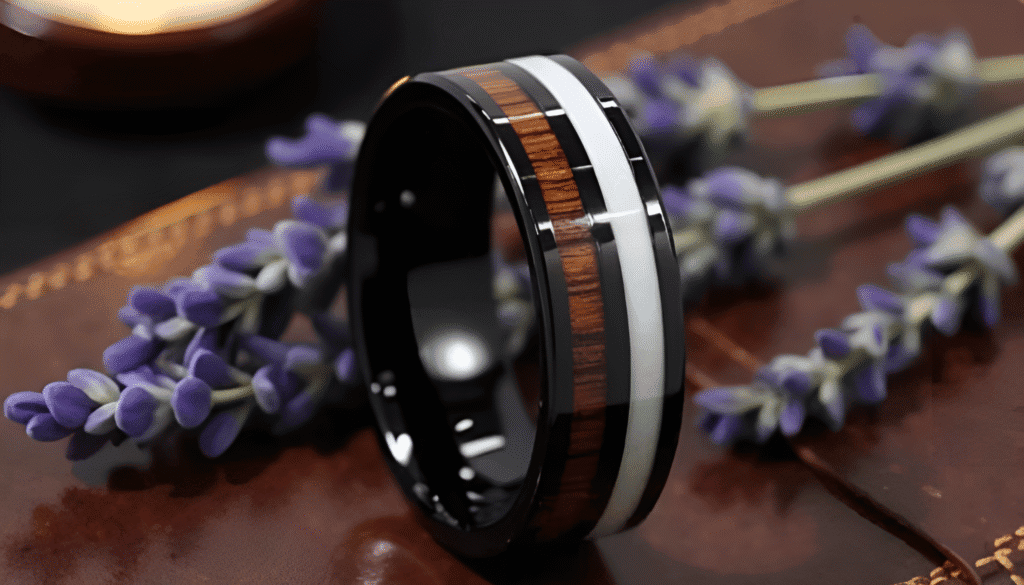
- Inlay Innovation: Tungsten’s strength makes it the perfect frame for embedding materials that would shatter or fall out of softer gold. This has led to the rise of exotic inlays like genuine carbon fibre, colorful opal, wood, or meteorite, creating true two-tone or multi-material rings.
Gold: Polished Tradition and Classic Aesthetics
Gold’s malleability, while a disadvantage for durability, is what allows it to be shaped into intricate, classic forms. However, for men’s wedding bands, this typically translates to a narrow range of looks.
- Traditional Polished Finish: Gold is most commonly worn in a classic, highly polished style. While elegant, this finish is immediately susceptible to showing scratches and fingerprints.
- Limited Natural Colours: Without plating, gold is limited to its natural shades. To achieve a White Gold look, the ring must be alloyed and plated with rhodium, a process that must be repeated regularly as the plating wears off.
- Focus on Carat & Detail: Gold rings often rely on the purity of the metal and the detail of any setting (such as small diamonds or milgrain edges) for their style appeal, rather than innovative surface finishes or base colours.
In essence, if your priority is a wide selection of modern, rugged, or two-tone designs that challenge the norm, tungsten is the superior material. If your preference is strictly for the highly polished, traditional metal aesthetic, gold will suffice.


Both materials can be considered safe for those with skin sensitivities, but the alloying elements are crucial.
- Gold alloys, particularly white gold, often contain nickel to increase hardness and achieve the white colour. Nickel is a common skin irritant, and this alloy can cause contact dermatitis in up to 15% of the population.
- Tungsten carbide is naturally hypoallergenic, but quality matters. You must ensure the ring uses a nickel binder (which is inert and non-reactive in tungsten carbide) and is cobalt-free, as cobalt can react with skin oils and cause the dreaded “ring rash.” Look for high-quality jeweller-grade tungsten. (For more details, see our guide on rings for sensitive skin.)
Water & Sweat Resistance
This is another area where tungsten’s industrial strength provides a clear advantage for an active or working man.
- Tungsten is entirely non-reactive, meaning it does not scratch or dull when exposed to sweat, seawater, pool chlorine, or cleaning chemicals. It maintains its mirror polish and shine with zero maintenance.
- Gold can lose its shine when exposed repeatedly to soaps, oils, and chlorine. White gold, in particular, requires rhodium replating every few years to keep its bright, white finish, adding to the long-term maintenance cost. Tungsten wins hands down for the gym, shower, travel, and hard work.
The Best Choice for Your Active Life
Want a ring that stays scratch-free for life? Shop our Tungsten Rings Collection with free 1–2 day UK delivery, 10,000+ 5-star reviews.
Resizing
The material that offers high durability also comes with one significant drawback: a lack of malleability.
- Gold can be melted, cut, and reshaped by any skilled jeweller. This means if your finger size changes due to weight fluctuation or age, your ring can typically be resized multiple times.
- Tungsten cannot be resized. Its extreme hardness makes cutting or manipulating it impossible once the ring is set. Instead, reputable jewellers offer a lifetime sizing warranty where the ring is replaced with a new one in the correct size. While this avoids the loss of shape, it means the original, sentimental ring piece is exchanged.
When Gold Might Be Better
Despite tungsten’s clear practical advantages, gold remains the right choice for a significant portion of men, particularly those who value tradition and intrinsic worth.
Gold is the better option if:
- Family Heirloom: You plan for the ring to be melted down, combined with other rings, or passed down through generations. Gold holds a unique historical and financial value that tungsten cannot match.
- Matching a Partner’s Ring: If your partner has chosen a gold, diamond-set, or intricately detailed ring, a gold band may match the aesthetic and material composition more closely.
- Traditional Style Preference: If you prefer the classic, warm hue of yellow gold and a lighter feel on the hand, no modern material can truly replicate that experience.
Conclusion
The debate between tungsten vs gold is ultimately a choice between practicality and prestige.
For most modern men, especially those with active lifestyles, tungsten is cheaper, stronger, and more scratch-resistant than gold. It requires zero maintenance and will look exactly the same decades after you buy it.
If you are looking for a ring that you never have to “baby,” that maintains a pristine finish through every activity, and offers the best long-term value for money, tungsten is the undisputed best choice. For those prioritizing tradition, financial investment, and the ability to resize, gold remains a timeless classic.