Why Sweaty Hands Need the Right Ring
The act of sweating, especially when combined with physical exertion, creates a dynamic environment that severely compromises the comfort and security of a standard wedding ring.
This section details the physiological and physical reasons why an active man needs a ring designed to manage moisture and temperature fluctuations.
1.1 The Lubrication Effect: Loss of Grip and Spinning
- Physiology of Sweat: When the body temperature rises, sweat glands excrete moisture and salts (electrolytes) onto the skin’s surface. On the fingers, this liquid acts as a highly effective, unwanted lubricant.
- Reduced Friction: A properly sized ring relies on a minimum level of friction against the skin to stay securely in place at the base of the finger. When sweat coats the skin, this friction drops drastically, causing the ring to become excessively loose and slippery.
- Risk of Loss: This slippery condition makes the ring susceptible to sliding off completely, particularly when hands are wet (such as washing hands, swimming, or shaking them vigorously after a run). A loose ring is a lost ring waiting to happen.
- Annoying Spinning: Even if the ring doesn’t fall off, the constant spinning is annoying and distracting during activities. Rings with decorative features or inlays are meant to be seen, and constant rotation defeats the purpose and can cause uneven wear.
1.2 The Trapped Moisture and Hygiene Risk
- Occlusion and Maceration: A rigid metal band, especially one with a narrow fit, acts like a seal, trapping moisture (sweat, water, soap residue) underneath the ring’s channel. Prolonged exposure to this trapped moisture causes the skin to soften and weaken, a process called maceration.
- Dermatitis and “Ring Rash”: This macerated skin becomes vulnerable to irritation. The trapped mixture of salt, dirt, and soap residue can lead to contact dermatitis, commonly known as “ring rash.” This condition involves itching, redness, flakiness, and discomfort, often forcing the wearer to remove the ring for days or weeks to heal.
- Alloy Irritation: While most durable metals (tungsten, titanium) are hypoallergenic, sweat can sometimes accelerate the corrosion of cheaper base metals (like nickel) used in some alloys or plating, further contributing to skin irritation and a rash.
1.3 The Discomfort of Swelling and Heat
- Vascular Dilation: When exercising or exposed to heat, blood vessels in the extremities dilate (expand) as the body attempts to regulate temperature. This increase in blood flow causes the fingers to swell.
- Pressure and Pinching: A ring that felt comfortable on a cool morning can become extremely tight on a swollen finger, creating uncomfortable pressure. Rigid, non-flexible metal bands cannot accommodate this natural swelling, leading to a restricted feeling or pinching when the wearer grips objects (like weights, ropes, or bicycle handlebars).
- Thermal Conductivity: While a light metal like titanium won’t heat up significantly, a heavier metal band can absorb and retain ambient heat (or cold), making the ring feel overly hot or heavy during training or during rapid temperature changes.
To mitigate these issues, active men must prioritize lightweight metals (Titanium, Silicone) and comfort-fit designs (a rounded interior) that allow moisture to escape and accommodate natural finger size fluctuations.
Best Materials for Active Men
The durability and comfort of a wedding ring for an active lifestyle are almost entirely dependent on the material chosen. Traditional precious metals like gold and silver are beautiful but lack the strength and resistance needed for sports, gym work, or heavy perspiration. Modern alternative materials, however, are engineered to handle these conditions effortlessly.
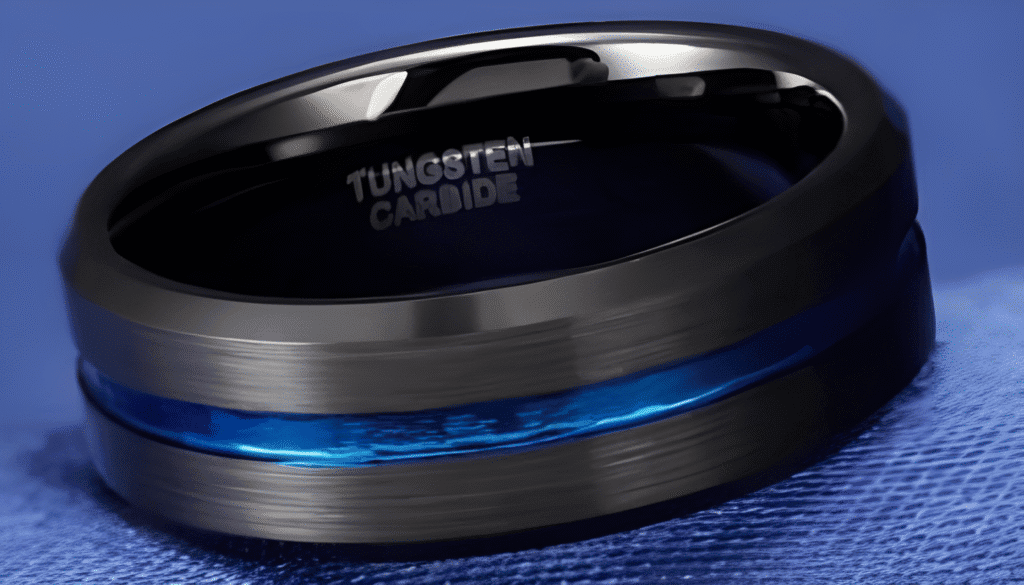
Tungsten: The King of Scratch Resistance
Tungsten carbide (often referred to simply as Tungsten) is formed from a tough combination of Tungsten metal and Carbon. It is the ideal material for the active man who prioritizes longevity and a traditional, premium metallic feel.
“Tungsten carbide (chemical formula WC) is a carbide containing equal parts of tungsten and carbon atoms… Tungsten carbide is approximately three times as stiff as steel … comparable with corundum in hardness, approaching that of a diamond.” Wikipedia
- Strength and Hardness: Tungsten is exceptionally hard, second only to diamond on the Mohs scale, making it the most scratch-resistant wedding band material available. For men who work with tools, heavy equipment, or frequently grab metal objects, tungsten virtually eliminates the superficial damage (scratches and scuffs) that quickly mars softer metals.
- Corrosion-Proof: Its structure ensures it is completely non-reactive. It will not corrode, rust, or tarnish when exposed to sweat, humidity, or harsh environments (like chlorine or saltwater), making it a truly “set-it-and-forget-it” ring.
- Weight Preference: Tungsten has a satisfying heft, giving the ring a substantial, high-quality feel. For men who appreciate the traditional weight of an heirloom piece but demand modern durability, tungsten is the superior choice.
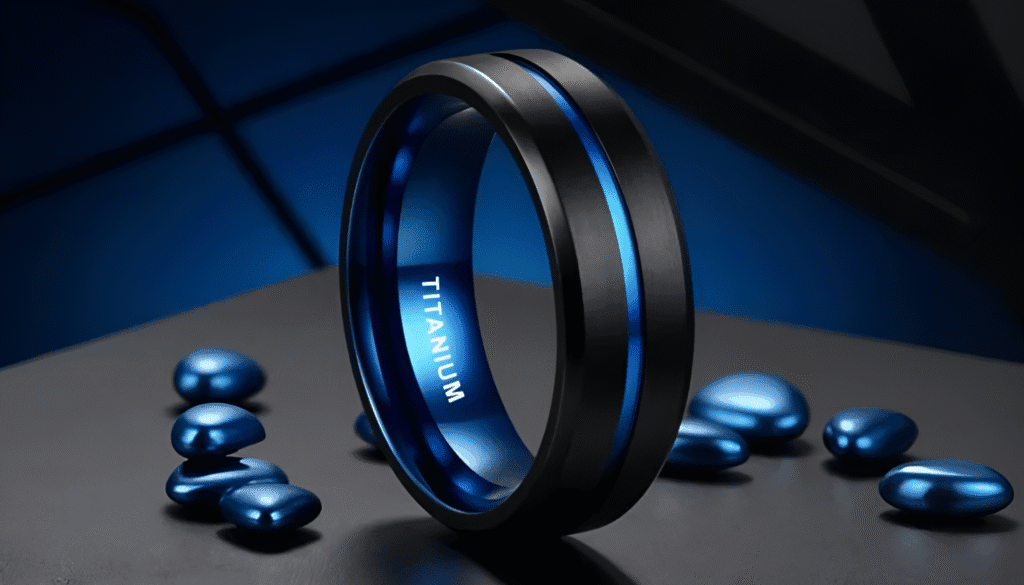
Titanium: The Champion of Lightweight Comfort
Titanium is a metal used in aerospace and medical implants, prized for its outstanding strength-to-weight ratio. It is the go-to choice for any active man who wants a ring that feels “barely there.”
- Extreme Lightness: Titanium rings are drastically lighter than their tungsten or gold counterparts. For high-volume activities like running, cycling, or tennis where finger swelling is common, titanium’s negligible weight minimizes friction, heat retention, and the tight, bulky feeling associated with heavy rings.
- Hypoallergenic Quality: Titanium is non-toxic and inert, making it naturally hypoallergenic. This is particularly crucial for men who sweat heavily or have sensitive skin, as it significantly reduces the likelihood of developing contact dermatitis or ring rash.
- Thermal Comfort: Because it is such a poor conductor of heat, titanium does not get overly cold in winter or overly hot in summer, offering superior thermal comfort during temperature extremes.
Silicone: The Ultimate Safety and Flexibility Alternative
Silicone is a flexible, non-metallic polymer designed specifically as a substitute wedding band for activities where metal rings pose a risk.
- Flexibility and Safety: Silicone’s defining characteristic is its stretch. It expands and contracts with finger swelling, eliminating pinching and discomfort. Most importantly, it is engineered to break away cleanly under extreme pressure (such as catching it on equipment), preventing the devastating finger injuries that rigid metal rings can cause.
- Non-Conductive: For men who work with electricity or in high-risk manual labor, silicone is non-conductive, offering a vital safety feature that no metal can match.
- Waterproof and Breathable: High-quality silicone is 100% waterproof and sweatproof. Many designs incorporate inner channels or grooves that promote air circulation and moisture wicking, ensuring the ring remains comfortable and hygienic even during the sweatiest workouts.



Beyond the material, the design and internal shaping of the ring are vital for maintaining a secure, comfortable fit, especially on sweaty or swelling fingers.
Want a ring that looks great after years of wear? Shop our Titanium Rings Collection with free 1–2 day UK delivery, 10,000+ 5-star reviews.
Rings for the Gym & Weightlifting
The gym floor is where the debate between metal and silicone is settled. While tungsten and titanium are tough enough to resist scratches from general daily use, metal rings pose a genuine safety risk during intense, grip-heavy workouts.
When gripping a barbell or pulling a kettlebell, a rigid metal ring can pinch the skin or, worse, risk the catastrophic ring avulsion injury if it catches. Furthermore, soft metals like gold can easily dent or scratch when coming into contact with knurled steel bars.
The Solution: Many married men adopt the “Two Ring” system: they wear their durable metal band socially and professionally, but they switch to a flexible silicone band for workouts, climbing, and weightlifting. Silicone absorbs impact, maintains grip, and eliminates the risk of finger injury associated with metal bands.
Rings for Runners, Cyclists & Outdoor Sports
For aerobic activities, the focus shifts away from impact risk and toward comfort and corrosion resistance. Runners and cyclists need a ring that stays put and feels light, reducing the feeling of weight or pressure as fingers swell.
- Sweatproof Metals: Tungsten and titanium are the ideal choices here. They are completely sweatproof, meaning they will not tarnish or discolour when exposed to high volumes of salt and moisture.
- Avoid Plated Rings: Rings with a black, blue, or other coloured coating (PVD plating) are durable, but sweat can contain trace minerals that accelerate the wear and tear on the coating over time. If you choose a plated ring, follow the cleaning guidelines below closely.
Best Rings for Swimming & Water Sports
Water exposure requires a metal that resists chemical degradation from chlorine and saltwater.
“When exposed to air, the surface of titanium metal and its alloys oxidizes immediately to form a thin passivation layer of titanium dioxide. This layer gradually thickens up to about 25 nm after several years and makes titanium highly resistant to corrosion, even in seawater.” Wikipedia
- The Risk for Traditional Metals: Saltwater is corrosive to gold and silver, causing them to dull and weaken over time. Chlorine found in swimming pools is particularly damaging to white gold, as it can strip the Rhodium plating and expose the yellow gold underneath, leaving a brassy colour.
- The Safe Choices: Tungsten and Titanium are both highly resistant to saltwater and chlorine. They are the best metal choices for swimming, though it is always safest to rinse them quickly afterward.
- The Safest Option: Silicone is non-porous and impervious to all water types, including chemical-heavy pools and ocean water. It is the safest choice for surfing, diving, and extended swimming, as its buoyancy and flexibility reduce the risk of loss compared to heavier metal rings.
- Learn more: Can you swim or shower with a wedding ring?
Hygiene & Cleaning Tips
A key way to ensure your wedding ring for gym or active use remains comfortable and avoids causing skin irritation is to clean it regularly. This is simple and requires almost no time.
- Rinse Immediately: After a particularly sweaty workout or swim, take your ring off and rinse it thoroughly under warm running water. This washes away salt, sweat residue, and dirt trapped underneath.
- Use Mild Soap: Once a week, clean the ring with a few drops of mild dish soap and warm water. Use a soft cloth or a very soft-bristled toothbrush to gently scrub the inner curve, focusing on the comfort-fit groove.
- Avoid Buildup: Always avoid applying heavy hand lotions or oils with your ring on, as these cause residue buildup that traps moisture against the skin and is a primary cause of irritation.
Conclusion
Finding a durable and comfortable ring doesn’t mean compromising your commitment or your lifestyle. If you want a ring that works for both everyday life and active sport, choose a hard-wearing metal like tungsten or titanium for its durability and style, and keep a silicone band handy for your toughest workouts.
Choosing a ring that fits your life, not one that makes you change it, is the ultimate marker of a great buy.