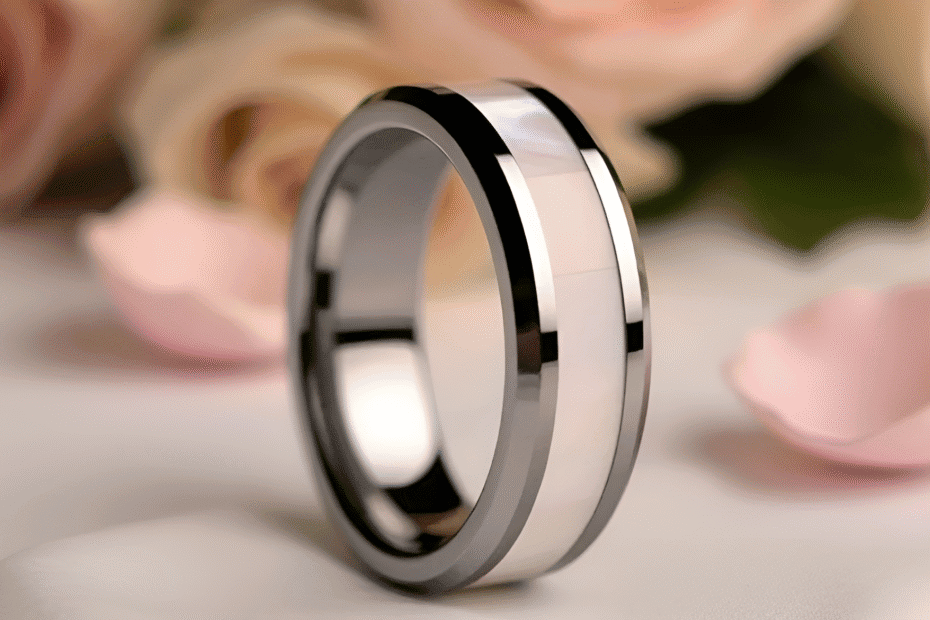
Cost of the Metal Itself
The metal chosen for a man’s wedding band is the most significant initial factor driving the ring’s price. This cost is determined by two main forces: the metal’s inherent market value (rarity) and the sheer volume of material required for a men’s band (density and size).
The Precious Metal Premium: Gold, Platinum, and Silver
Precious metals carry a high price because they are finite, rare, and their value is tied to global commodity markets.
- Gold and Silver Pricing: The price of a gold or silver band is directly linked to the current market price of the raw material. Since men’s bands are typically wider and thicker than women’s bands, they require a significantly larger volume of metal, which compounds the high material cost.
- Karat Purity: Gold is mixed with other alloys for durability, measured in karats (K). 18K gold (75% pure) is more expensive than 14K gold (58.3% pure) because it contains more pure gold by weight. The higher the karat, the richer the colour and intrinsic value, but also the softer and more expensive the ring.
- Density and Weight: Platinum, while sometimes trading lower than gold per ounce, is incredibly dense. This means an identical ring crafted in platinum will be substantially heavier and require more mass than a gold or alternative metal ring, leading to a much higher final price tag.
- The Resale Factor: The high cost of these metals is partly justified by their intrinsic value, meaning they hold a substantial resale or heirloom value, unlike modern alternative metals.
The Value of Modern Alternative Metals: Tungsten, Titanium, and Steel
Modern metals are significantly more affordable, but this difference is based on their abundance, not their quality. They offer superior durability for a fraction of the cost.
- Tungsten/Titanium are Cheaper but Higher Durability: These metals are more abundant in the Earth’s crust and are not traded on the same volatile commodity markets as gold.
- Manufacturing Cost: While the raw materials are cheaper, the final product is highly durable. Tungsten, in particular, is extremely hard and scratch-resistant (about 10 times harder than gold), meaning its price is driven more by the complexity of its specialized manufacturing (shaping and polishing) than the cost of the raw material itself.
- Steel and Silicone: The lowest price points are occupied by stainless steel and silicone. Steel is durable but lacks the prestige of other metals, and silicone is a non-metal designed for safety and activity, making it the most affordable option.
Rare Materials: The Rarity and Labour Tax
Rings featuring inlays of unique materials carry a higher cost because the price is defined by their scarcity and the complex, painstaking labour involved in their use.
- Scarcity: Materials like genuine meteorite, dinosaur bone, or rare wood types (e.g., whiskey barrel oak) are either one-of-a-kind finds or difficult to ethically source, automatically inflating their value.
- Labour to Stabilise: These materials are often brittle (like opal or bone) or porous (like wood) and cannot be worked with standard jewellery tools. They require special processes to be cut, shaped, and permanently stabilized within the metal ring structure using resins and precise protective coatings. This highly specialized, time-consuming labour adds significant cost to the final ring.
As industry experts explain:
“Precious metals like gold and platinum command higher prices because of their rarity and the fluctuating cost of raw materials. Add in a designer label or gemstone, and you’re not just paying for the ring, you’re paying for the prestige.”
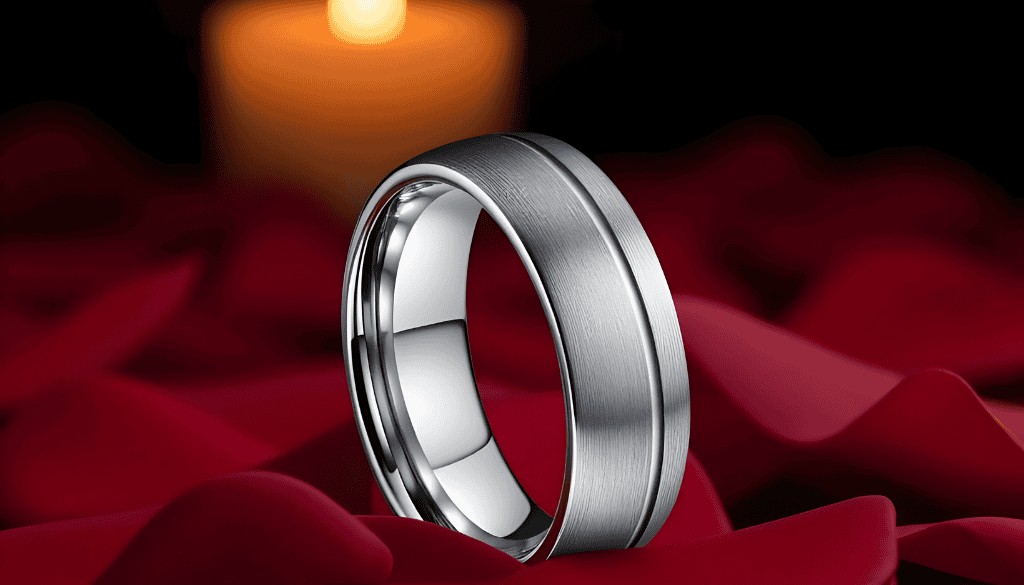
Craftsmanship & Manufacturing
High-quality construction significantly increases the final cost of a ring. A piece that is machine-made in bulk will always be cheaper than one finished by hand.
- Comfort-Fit Shaping: One of the most important but unseen features is the “comfort-fit” interior. This construction means the interior edges of the band are rounded, not flat. This specialised shaping prevents pinching when gripping and allows the ring to glide over the knuckle more easily. It requires greater precision and uses more metal than a flat-profile band, adding to the manufacturing cost.
- Polishing, Beveling, Hammering, Brushing: Achieving different finishes is a labour-intensive process. A mirror polish requires hours of slow, meticulous buffing. Complex finishes like hammering or deep brushing require specialized tools and highly skilled hands to ensure the pattern is consistent and deep enough to last a lifetime.
- Strengthening and Finishing Processes: For white gold, the ring must be plated with rhodium to achieve its bright white sheen, a process that must be repeated every few years. Alternative metals often undergo strengthening processes like alloying (e.g., in tungsten carbide) or anodisation (for coloured titanium) to ensure the ring maintains its structural integrity and finishes permanently.
Inlays & Design Features
The price of a men’s wedding ring significantly increases the moment a complex design element, such as an inlay, is introduced.
This increase is driven not by the value of the inlay material itself, but by the dramatic rise in technical difficulty and labour time required for a multi-material or dual-finish construction.
The Cost of Complex Inlays
An inlay is a distinct material (wood, carbon fiber, opal, etc.) that is inserted into a channel cut within the primary metal band. This process moves the construction from a simple one-piece design to a highly engineered, multi-stage operation.
- Precision Machining: The main ring metal (e.g., tungsten or titanium) must first be precisely machined to create a perfect channel for the inlay. This channel must be cut to an exact depth and width, which is difficult, especially with extremely hard metals.
- Source and Preparation: The inlay material itself requires intense preparation. Wood must be stabilized with resins to prevent cracking, swelling, or rotting. Materials like opal or dinosaur bone are brittle and must be carefully cut, polished, and reinforced before they can be set. This specialized work is often outsourced or requires dedicated, expensive equipment.
- Setting and Sealing: The inlay must be set into the channel using high-strength jewellery adhesive (resin) and then sealed with a protective, clear coating (often epoxy or resin). This stage is critical, as any air bubbles, misalignment, or incomplete sealing will compromise the longevity of the ring and lead to the inlay material falling out or getting damaged. The need for absolute perfection in this stage adds considerable labour time and cost.
Dual-Colour Designs and Finishes
Rings that combine two different colours or metals, or feature unique texture combinations, require specialized masking and finishing techniques.
- PVD Coating and Masking: To achieve colours like black, blue, or rose gold on a titanium or tungsten base, a process called Physical Vapor Deposition (PVD) is often used. If a ring is designed to have, for example, a bright silver edge and a black center track, the silver part must be painstakingly masked off before the black PVD is applied. After the coating, the masking is removed. This process must be repeated for every colour or finish variation, requiring precise hand-application and removal.
- Contrast Finishing: Creating contrasting finishes, such as a highly polished inner edge with a textured, hammered outer surface, requires the jeweller to physically block or mask one part of the ring while working on the other. This ensures the brushing or polishing wheels do not accidentally touch and ruin the finished surface nearby, dramatically increasing the time spent by the artisan.
Gemstone Setting (The Diamond Factor)
While most men’s rings avoid large central stones, the inclusion of small diamonds or other gemstones adds significant cost due to the materials and the labour:
- Stone Cost: Even small, “flush-set” diamonds add a baseline cost based on the 4 C’s (cut, colour, clarity, and carat weight).
- Setting Labour: Setting a stone requires the creation of a secure pocket within the metal band. For flush-set stones (set level with the surface), each tiny cavity must be drilled and cut with high precision to ensure the stone is held securely without weakening the band’s structure. This is highly skilled work.


Adding a personal inscription, whether a date, initials, or coordinates, requires specialist technology and expertise.
- Laser Engraving Tech: The toughest metals, like tungsten, require powerful Personalised men’s rings using laser engraving technology. This precise machinery is expensive to purchase and maintain, and the time taken for a jeweler to set up and execute a custom engraving adds to the overall cost.
- Inside vs. Outside Engraving: While inside engraving is discreet, exterior engraving or complex designs (like fingerprints) require extremely fine, high-definition laser work to ensure the design is legible and permanent, which increases the time and effort invested.
Packaging & Presentation
While it may seem minimal, the way a ring is presented and protected factors into the final retail price.
- High-Quality Boxes: Premium rings often come in presentation boxes made from high-quality wood, leather, or other fine materials designed to protect the ring long after purchase.
- Certificates: The inclusion of certificates of authenticity (especially important for gold, platinum, or tungsten vs gold rings) provides the buyer with peace of mind and verifies the metal content, adding a small administrative cost.
- Free Exchanges/Sizing Kits: Retailers who offer services like a free sizing kit or guaranteed size exchanges often build a small margin into the price to cover the cost of shipping, administration, and potentially replacing a ring if the size is incorrect (especially true for non-resizable alternative metals).
Warranty, Returns & Resizing Policies
The guarantee that comes with your ring is a significant hidden value that influences the cost. A great warranty gives you peace of mind that your investment is protected.
- Exchanges and Replacements Cost Businesses Money: Retailers offering lifetime sizing guarantees or lifetime replacement warranties for manufacturing defects must factor the potential cost of replacing a ring into their retail price. Guarantees are insurance for the buyer, paid for in the initial price.
- Resizing vs. Replacement: Traditional gold and silver are easily resizable, but this service still costs £50–£100 per instance. Alternative metals like tungsten and titanium cannot be resized and must be replaced. A reputable retailer who promises free replacements if your size changes is building a high level of customer service into your purchase price.
Want a ring that looks great after years of wear?
Shop our Titanium Rings Collection with free 1–2 day UK delivery, 10,000+ 5-star reviews, and a lifetime size guarantee.

Why Tungsten & Titanium Are Better Value
When viewed through the lens of durability and long-term cost, alternative metals like tungsten carbide and titanium offer unbeatable value compared to gold and silver.