One of the most common questions for new ring owners, especially men who have never worn jewellery daily, is about the interaction between the ring and water. It’s a natural concern for an item meant to be worn 24/7.
The simple truth is this: Water itself is rarely the problem. The issue lies with the chemicals, soaps, heat, salt, and physical impact that come with swimming or showering. Different metals react very differently to these elements, meaning the best practice for a gold ring is completely different from a titanium ring.
This guide breaks down the specific risks of water exposure and gives you a metal-by-metal analysis to ensure your band stays secure, safe, and shining for a lifetime.
Swimming in Chlorine Pools
Chlorinated water poses one of the most severe threats to traditional wedding band metals. This is where the difference between soft, precious metals (gold, silver) and hard, modern metals (tungsten, titanium) is most evident.
The Chemical Threat
Chlorine is a highly reactive element and a strong oxidising agent. While it keeps the pool clean, it is the enemy of gold and silver.
Risk for Traditional Metals (Gold and Silver):
- Corrosion and Weakening: Nearly all gold jewellery is alloyed (mixed) with metals like copper or silver to increase strength. Chlorine attacks these alloys, not the pure gold. Over time, repeated chlorine exposure can cause corrosion, weaken solder joints, and make the ring brittle.
- Tarnish and Discoloration: Chlorine can cause gold alloys to darken, become yellowish, or develop white spots. Silver is especially vulnerable, often tarnishing almost immediately when exposed to chlorine.
Protection for Modern Metals (Tungsten and Titanium):
- Tungsten and titanium are highly resistant to corrosion and will not chemically react with chlorine. They can withstand repeated exposure without tarnishing or structural weakening.
The Physical Threat (The Risk of Loss)
The greatest danger for all rings in a pool is not chemical damage, it’s loss.
- Finger Shrinkage: Water, especially if it’s cooler than your body temperature, causes your blood vessels to constrict. This leads to temporary finger shrinkage, making a ring that normally fits securely feel loose and slippery.
- Easy Slip-Off: When combined with the slick feeling of pool water, the ring can slide right off your knuckle during a quick jump, a high-five, or even a vigorous stroke. Once lost in a pool filter or drainage system, recovery is highly unlikely.
Regardless of the metal, the safest practice is to remove the ring before swimming. If you must wear a ring, opt for a highly durable metal like tungsten (read more: can tungsten get wet).
Swimming in the Ocean (Saltwater)
Swimming in the ocean presents a similar set of risks, trading the chemical threat of chlorine for the corrosive nature of salt and the added danger of sand.
- Saltwater Corrosion: The high salt content (sodium chloride) in ocean water is corrosive. Salt acts as an electrolyte, accelerating the oxidation process on soft metals.
- Gold/Silver Risk: Salt accelerates tarnish and can weaken the metal alloys in gold and sterling silver, causing discoloration and surface damage over time.
- Abrasive Sand: Tiny, abrasive particles of sand act like sandpaper against the polished surface of your ring. Gold is particularly soft and easily scratched, diminishing its shine and requiring professional polishing.
- High Risk of Loss: As with pools, the cold ocean water will cause your fingers to shrink. When combined with the natural slipperiness of salt water, the risk of losing the ring to the current is extremely high.
For Surfers/Divers: If you are actively involved in ocean sports, a lightweight, flexible silicone ring is the recommended backup. It provides the symbolic presence of a wedding band without the risk of loss, damage, or snagging.
Showering With a Wedding Ring
Showering is the least chemically harmful of the water activities, but it poses a different set of aesthetic and hygiene challenges for your ring.
The primary issues are not metal corrosion, but soap and residue buildup.
| Concern | Effect on the Ring | Solution |
|---|---|---|
| Soap Buildup | Hand soaps, shower gels, and shampoos contain surfactants, oils, and moisturizers. These chemicals create a thin film or soap scum on the ring’s surface, trapping dirt and causing the metal (especially polished metals) to lose its shine and brilliance. | Rinse thoroughly, or simply remove the ring before showering to prevent the film from forming. |
| Trapped Bacteria | Shampoo and conditioner can leave residue that gets trapped underneath the band and in the comfort-fit groove. This damp, confined space becomes a breeding ground for bacteria and soap residue, which can cause skin irritation, redness, or a fungal infection beneath the ring. | Remove the ring weekly for a deep clean and ensure your finger is fully dry after showering. |
| Dull Finish | Polished finishes get dull faster due to constant exposure to mineral deposits from hard water stains and the friction of daily wear and showering. | Choose a brushed or matte finish, which naturally hides water spots and minor scuffs better than a mirror polish. |
Want a ring that resists everything?
Shop our Titanium and Tungsten Rings Collection with free 1–2 day UK delivery, 10,000+ 5-star reviews, and rings built from high-quality, scratch-proof materials.
Hot Tubs, Steam Rooms, and Spa Baths (The High-Heat Hazard)
High-heat, high-humidity environments like hot tubs, steam rooms, saunas, and spa baths pose the highest risk to your ring’s comfort and longevity. These environments combine several damaging factors: heat-induced swelling, chemical concentration, and extreme slipperiness.
1. High Heat = Finger Swelling
The most immediate danger is to your own comfort and safety.
- Fluid Retention: Exposure to high heat causes vasodilation (the widening of blood vessels) and leads to fluid retention in the extremities.
- The Ring Gets Stuck: If your ring is already a snug fit, the combination of heat and fluid retention can make your finger swell significantly, making the ring painfully tight and potentially impossible to remove until your body temperature cools down. A ring that is too tight in this scenario is a medical hazard, as it can restrict circulation.
2. Chlorine + Heat: The Worst-Case Scenario
Hot tubs and spa baths often contain a higher concentration of chemicals (like chlorine, bromine, and sanitizers) than standard swimming pools, as the heat helps the chemicals sanitize the water more effectively.
- Accelerated Corrosion: The combination of high heat and high chemical concentration drastically accelerates the chemical reactions that damage jewellery. The heat opens the pores of the metal alloys, making them more susceptible to attack.
- Risk for Gold/Silver: For traditional gold and silver rings, this is a worst-case scenario. The heat speeds up the corrosive process where chlorine attacks the softer metal alloys, potentially weakening the structure and causing quicker discoloration than regular pool swimming.
- Deterioration of Black Finishes: While highly durable, high heat and concentrated chemicals can, over time, deteriorate the chemical bonding or plating used to create black or colour-plated rings, leading to premature fading.
3. Slipperiness and Loss
The surface of the ring becomes extremely slick due to the combination of heat, humidity, and the various lotions, body oils, and minerals present in the spa water.
- Loss Risk: This slipperiness, combined with the fact that you often move your hands frequently while getting in and out of the water, increases the chance that the ring could slip off your swollen finger and be lost in the jets, bubbles, or drainage system of the tub.
Conclusion: Never wear a ring in a hot tub, sauna, or steam room. Store it securely outside the room until you are completely cool and dry.
Metal-by-Metal Guide to Water Exposure
The lifespan and appearance of your ring depend entirely on the metal you choose. Modern metals offer superior water resistance for active lifestyles.
| Metal | Chemical Reaction to Water/Salt/Chlorine | Risk of Loss/Slipping | Best Practice |
|---|---|---|---|
| Tungsten | Safe: Won’t tarnish, rust, or corrode. Highly resistant to chlorine and salt. | High in cold water (heavy weight and slickness increase the risk of slipping). | Remove before swimming; fine for showering. |
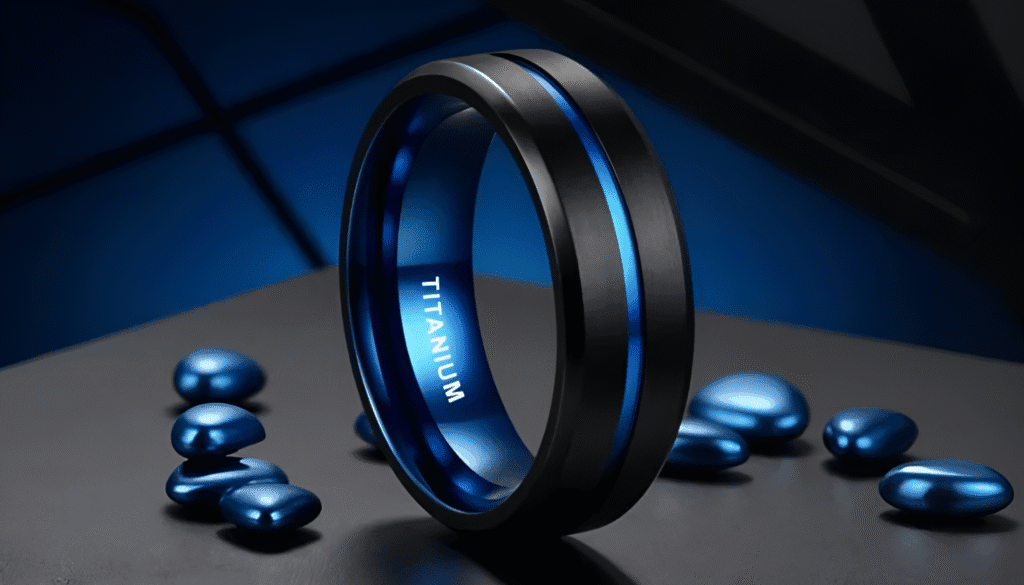
| Titanium | Fully Waterproof: Extremely corrosion-resistant due to its protective oxide layer. No rust or chemical degradation. | Moderate in cold water (lighter weight reduces the risk compared to tungsten, but finger shrinkage is still a factor). | Remove before swimming; fully safe for showering. |
| Gold (14K/10K) | Corrodes/Weakens: Alloys react with chlorine and salt. Soft metal is prone to scratching. | Moderate risk of loss; the softer metal can also warp from impact or pressure. | Must be removed before swimming or using hot tubs. Avoid showering regularly. |
| Silver (Sterling) | Tarnishes Heavily: Reacts quickly with chlorine, sulphur, and salt, leading to significant darkening and corrosion. | Moderate risk of loss. | Must be removed before any water exposure (swimming, ocean, shower). |
| Silicone | 100% Safe: Completely non-reactive, non-corrosive, and fully waterproof. | Very low risk of loss (grips the skin better), but will stretch over time. | Safest choice for sports, swimming, and holidays. |
“Titanium rings… are biocompatible (hypoallergenic), lightweight, corrosion‑resistant, and have the highest strength‑to‑weight ratio of any crystalline metal. It is highly resistant to most causes of corrosion, including sea water, aqua regia, chlorine (in water), and some acids,” Wikipedia
Will the Colour Fade?
For durable modern metals, the base colour will not fade, but the surface appearance can change depending on the finish:
- Polished Metals Dull Fastest: Rings with a mirror-shine polish will quickly lose their lustre in the shower due to soap residue and minute scratches from sand or abrasion.
- Brushed/Matte Hides Marks Better: A matte or brushed finish is far more forgiving to water spots and daily wear. It maintains its intended look longer than a high-polish finish.
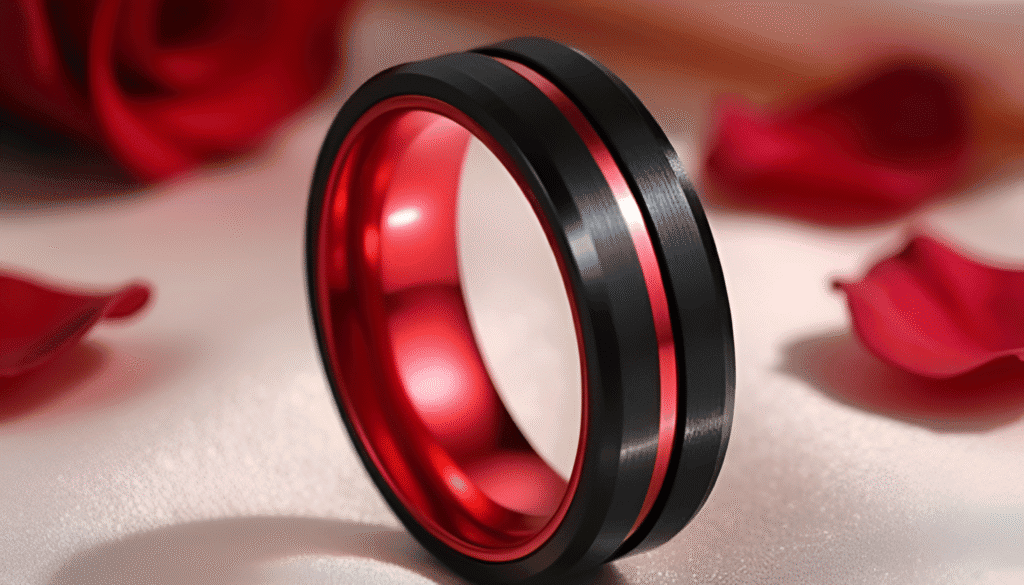
- Black or Plated Rings Need Care: Black tungsten rings use a permanent chemical bonding process, making them highly resistant to water. However, if your ring is cheaply plated (not the high-quality process used for our men’s black rings), exposure to harsh chemicals or scrubbing can cause the plating to chip or fade.
Best Practice: Take It Off or Swap Rings
The most important guideline for ensuring your wedding ring lasts a lifetime is to develop safe habits.
- Safe Storage Habits: Create designated storage spots at home. Keep a small, non-abrasive dish or hook next to your sink, shower, and bedside table. Never take your ring off and place it on the ledge of a sink or a railing, where it can easily be knocked down the drain.
- Keep a Silicone Alternative: For high-risk activities like swimming, gym use, or holidays where you may frequently be in the water, keep a high-quality silicone ring as a temporary, safe substitute. This keeps your metal ring safe while maintaining the symbol of your marriage.
- Waterproof Travel Pouch: When travelling, use a small, zippered, waterproof travel pouch for secure storage, preventing the ring from rubbing against other objects in your bag.
Conclusion
Your wedding ring will last longer, look better, and remain safely on your hand if you remove it for swimming and daily showers.
If you are committed to a ring you never have to take off, whether for work or play, your best choice is a highly corrosion-resistant metal like tungsten or titanium. These modern materials are built to withstand the elements without compromise.
Browse our selection of the best rings for active lifestyles to find a ring that is as rugged and reliable as your commitment.
Frequently Asked Questions
Yes. Sunscreen and tanning oils can leave a greasy residue on both the metal and any inlay, dulling the ring’s sparkle and sheen. The chemicals in sunscreen can also accelerate tarnishing in silver and some gold alloys. Always remove your ring before applying sunscreen and clean it thoroughly afterward.
No. While cleaning an everyday ring requires only mild soap and water, you should never use chlorine or pool water to clean your ring. Chlorine is an oxidising agent that will cause damage to softer metals over time. Use a dedicated jewellery cleaner or a mixture of warm water and mild dish soap.
Any gold ring below 24K (pure gold) contains alloys (like copper, zinc, silver) that are essential for strength, but these alloys are what react with chlorine and salt. Only pure 24K gold is inert, but it is too soft to be worn daily. Therefore, any wearable gold ring is susceptible to chemical damage.
Titanium is highly durable and far more scratch-resistant than gold or silver, but it is not completely scratch-proof. Tungsten is substantially harder and is the most scratch-resistant option, ranking near a 9 on the Mohs hardness scale. For ultimate scratch resistance, consider titanium vs tungsten to see which fits your lifestyle best.
A ring can be lost surprisingly quickly. Cold water can cause finger size to decrease by up to half a ring size in minutes. This means a ring that felt perfectly snug on the beach can slip right off the moment you enter the cold ocean or pool water, making the loss immediate and often unnoticed until you’re already back on shore.
About the Author
This article was written by the team at Newman Bands, specialists in men’s rings with over a decade of experience supplying durable, stylish, and meaningful men’s rings.
With insights drawn from thousands of customer reviews, wear tests, and material comparisons, our goal is to help you choose a ring that fits your life and lasts. We’re proud to offer expert-backed advice and high-quality rings, backed by over 10,000 five-star reviews from customers across the UK. Every piece is designed for real-life wear, whether you’re at work, the gym, or walking down the aisle.